China Best Pure Sucralose Powder Supplier for Bulk Buyers?
The global sucralose market continues to attract food, beverage, nutraceutical, and pharmaceutical manufacturers. Grand View Research identifies rising demand for low-calorie sweeteners as a major market driver. Mordor Intelligence also reports expanding use in reduced-sugar products and functional formulations. However, market estimates vary by definition, region, and product category.
That matters to bulk buyers.
A reliable China supplier should offer more than competitive pricing. Buyers need consistent purity, controlled particle size, stable packaging, and complete batch documentation. A practical review should examine assay results, moisture content, heavy metals, microbiological limits, and production traceability. Each batch should arrive with a clear certificate of analysis. Packaging should protect the powder from humidity during ocean transport and warehouse storage.
Regulatory acceptance also deserves careful attention. The Joint FAO/WHO Expert Committee on Food Additives established a sucralose acceptable daily intake of 0–15 mg per kilogram of body weight. The U.S. Food and Drug Administration and European authorities have evaluated sucralose for approved food applications. These assessments do not remove the buyer’s responsibility to verify local requirements.
Supplier experience becomes visible in small details. Does the technical team answer specification questions precisely? Can it provide samples from commercial production? Are ISO, HACCP, GMP, and audit records available when requested?
No supplier is perfect.
Reports can simplify a complex market, while certificates can hide weak testing practices. Therefore, this guide compares China-based Pure Sucralose Powder suppliers through documentation, quality controls, manufacturing capability, export experience, and buyer support. The goal is not merely to find the lowest quote. It is to identify a dependable partner for repeat bulk orders.
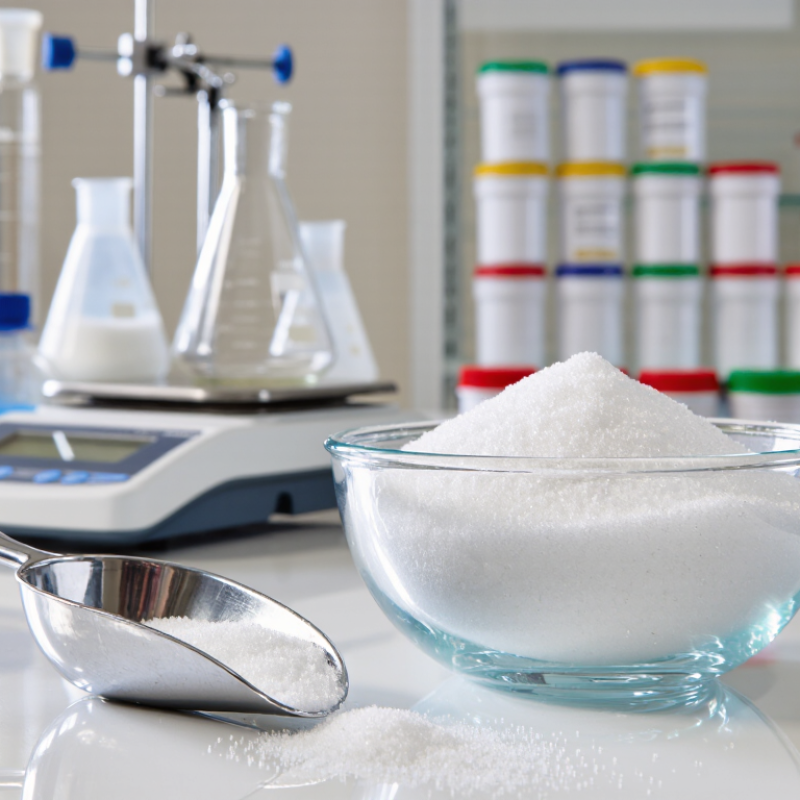
Pure sucralose powder is an intense sweetener made by modifying selected sugar molecules. It tastes similar to sugar but provides very few calories at typical use levels. Commercial pure grades usually contain a high percentage of sucralose without added sugar or bulk carriers. The powder is white, free-flowing, and highly concentrated. A small amount can sweeten a large batch.
Its main value is flexibility. Food manufacturers use it in powdered drink mixes, soft drinks, dairy products, baked goods, sauces, and tabletop sweeteners. Sucralose also performs well in many heated applications. However, sweetness can become difficult to control. Poor dispersion may create uneven flavor, especially in dry blends. Blending it with a suitable carrier often improves dosing accuracy, although that changes the meaning of “pure powder.”
Bulk buyers should review more than price. Request a current certificate of analysis, assay data, moisture results, microbiological limits, heavy metal testing, and clear batch traceability. Packaging should protect the powder from moisture and contamination during storage. Check the product specification against the destination market’s food regulations. Requirements can differ by country and application. One common mistake is assuming every high-purity powder suits every recipe. Pilot testing remains necessary. Keep samples from each lot for comparison. This simple step can reveal changes in sweetness, flow, or odor before full production.
For bulk buyers, sucralose quality starts with a clear, written specification. The document should state assay, moisture, particle size, and permitted impurities. Food-grade material should match the regulations of the destination market. A current certificate of analysis is essential. Check the lot number, test date, methods, and laboratory identity. Do not rely on a generic certificate. It may not describe the shipped batch.
Appearance also provides useful clues. The powder should be white, free-flowing, and without unusual odor. Clumping can suggest moisture exposure. Test samples should confirm sweetness consistency and dissolution in water. Microbiological results, heavy metal limits, and residual solvent controls deserve attention. Packaging matters too. Sealed inner bags, dry containers, and clear labeling protect the powder during long transport. One detail is easy to miss. Ask for retention samples and a defined complaint process before placing a large order. I would not approve a shipment from assay alone. Traceability, production records, and supplier audits reveal how reliably the specification is followed. A small pre-shipment sample can expose problems early, although it cannot replace independent testing. Bulk purchasing also needs realistic tolerance limits. Extremely narrow requirements may increase cost without improving the final product. A careful buyer should review those limits with a qualified food technologist.
How to Evaluate Chinese Sucralose Powder Suppliers
Grand View Research estimates the global sucralose market at about USD 1.06 billion in 2023. Its report projects a 7.1% compound annual growth rate from 2024 to 2030. This growth attracts many Chinese suppliers. A polished website proves little. Ask for a current business license, production address, and factory audit access. Check whether the manufacturer or trader holds valid HACCP, ISO 22000, or FSSC 22000 certification.
Request a sample from the same lot proposed for bulk shipment. Compare its white color, free-flowing texture, sweetness profile, and moisture level. The certificate of analysis should show assay, moisture, residue on ignition, and microbiological results. Independent laboratory testing can verify the stated purity. Ask for an HPLC method and test date. Do not accept a copied certificate.
Traceability matters. Each carton should carry a lot number, production date, net weight, and storage conditions. Confirm whether the supplier can provide retention samples and a written complaint procedure. FAO and WHO’s JECFA database lists an acceptable daily intake for sucralose of 0–15 mg per kilogram of body weight. This does not replace your own regulatory review. Requirements may differ by market.
Price deserves skepticism. A very low offer may reflect weaker testing, old inventory, or unclear packaging. I would compare three quotations using identical specifications. Also inspect a real pallet, not only photographs. One overlooked issue remains: some buyers specify “pure” powder without defining assay or particle size. That creates disputes later. Clear specifications prevent them.
| Evaluation Dimension | Suggested Weight | Realistic Buyer Benchmark | Documents or Verification Evidence | Warning Signs | Scoring Guide |
|---|---|---|---|---|---|
| Product Identity | 10% | Food-grade sucralose powder should be identified as sucralose, CAS No. 56038-13-2, with the molecular formula C12H19Cl3O8 and a molecular weight of approximately 397.64 g/mol. | Current product specification, product label, technical data sheet, and an independent laboratory report confirming identity. | Inconsistent CAS number, unclear chemical name, or documents describing a sweetener blend instead of pure sucralose. | 0–10 |
| Assay and Purity | 15% | The supplier should state a measurable assay specification and test method. For bulk food applications, buyers commonly request a high-purity grade supported by batch-specific results rather than relying only on a catalog claim. | Batch-specific certificate of analysis, validated HPLC method, chromatogram when available, and comparison between the specification limit and actual result. | Generic COA reused for multiple lots, missing test dates, unexplained “100% pure” claims, or no analytical method. | 0–15 |
| Regulatory Compliance | 15% | Documentation should match the destination market. Sucralose is recognized as food additive E955 in the European Union and is covered by applicable food-additive requirements in major markets. China-related documentation should reference the relevant national food-safety standard, such as GB 25531-2010 where applicable. | Food-additive compliance statement, applicable standard references, specification, allergen statement, non-GMO statement where required, and export documentation. | A certificate issued for a different product, outdated standard references, or claims that approval in one market automatically covers all markets. | 0–15 |
| Contaminant and Microbiological Control | 12% | The lot should be assessed for relevant heavy metals, residual solvents where applicable, microbial limits, foreign matter, and other contaminant parameters required by the buyer’s specification. | Batch COA, microbiological report, heavy-metal results, contaminant-control procedure, and third-party testing from an ISO/IEC 17025-accredited laboratory when required. | Only assay is reported; no microbiology, no heavy-metal data, or results are shown without units and detection limits. | 0–12 |
| Manufacturing Quality System | 12% | A suitable manufacturer should operate documented quality controls, traceable batch records, change-control procedures, and a system appropriate for food-ingredient production. | Valid GMP, HACCP, ISO 22000, FSSC 22000, or equivalent certification; audit report; process-flow diagram; and traceability or mock-recall records. | Certificates cannot be verified, the certificate scope excludes sucralose, or the supplier refuses a reasonable quality audit. | 0–12 |
| Physical Form and Handling | 8% | The product should be a consistent white crystalline powder with controlled particle characteristics suitable for the buyer’s blending, dissolution, and packaging process. | Product specification covering appearance, solubility, particle-size information where relevant, moisture or loss-on-drying, storage conditions, and sample evaluation. | Excessive caking, inconsistent color, unexplained particle-size variation, or a sample that differs from the proposed bulk lot. | 0–8 |
| Packaging and Shelf Life | 8% | Common bulk formats may include lined bags, cartons, or drums in sizes such as 1 kg, 5 kg, or 25 kg, but the final pack should be agreed according to transport and application needs. Packaging must protect the powder from moisture and contamination. | Packaging specification, food-contact declaration when applicable, lot coding, manufacturing date, expiry or retest date, storage instructions, and palletizing details. | Missing lot number, damaged inner liner, unclear shelf-life basis, or packaging that cannot withstand international transport. | 0–8 |
| Supply Capacity and Lead Time | 8% | The supplier should demonstrate stable production capacity, realistic minimum order quantities, repeat-order availability, and a documented lead-time process for samples and commercial shipments. | Production schedule, capacity statement, MOQ, historical delivery performance, inventory policy, and a written production or shipment timeline. | Unusually short promises without stock evidence, repeated changes to delivery dates, or inability to provide a consistent production plan. | 0–8 |
| Export and Logistics Capability | 5% | The exporter should understand commercial invoices, packing lists, certificates of origin, customs descriptions, and destination-country import requirements for food ingredients. | Sample export documents, Incoterms quotation, HS-code confirmation by the buyer’s customs broker, freight options, and cargo insurance process. | Vague Incoterms, inconsistent customs descriptions, or unwillingness to provide documentation before order confirmation. | 0–5 |
| Commercial Transparency | 4% | A reliable quotation should clearly separate product price, packaging, testing, freight, insurance, taxes, payment terms, and validity period. Prices should be compared on the same delivery basis. | Formal quotation, payment terms, proforma invoice, price-validity period, sample policy, and a total landed-cost comparison. | Hidden charges, pressure for full payment before verification, or a price that changes substantially without an explained basis. | 0–4 |
| Communication and Technical Support | 3% | The supplier should respond consistently, understand the intended application, provide technical documents in English, and support complaint investigation and corrective action. | Response records, technical questionnaire, specification revision history, complaint procedure, and named quality or regulatory contact. | Contradictory answers, delayed document delivery, or sales-only communication with no quality contact. | 0–3 |
| Sample-to-Bulk Consistency | 10% | The approved sample should match the commercial lot in identity, appearance, assay, packaging, and application performance. A retained reference sample is useful for later comparison. | Pre-shipment sample, retained sample, batch COA, third-party pre-shipment inspection, and a written approval procedure. | Supplier changes the manufacturing site or specification after sample approval without written notice. | 0–10 |
Recommended purchasing practice: shortlist suppliers that achieve at least 80% of the weighted score, pass identity and regulatory checks, and provide a satisfactory sample and batch-specific COA before a bulk order.
For bulk buyers comparing a China-based pure sucralose powder supplier, purchasing starts with evidence, not a low quotation. Request a recent certificate of analysis, assay result, microbiological limits, heavy-metal data, and batch traceability. Check whether documents match the exact production lot. A small pre-shipment sample can reveal flow, color, odor, and dissolving behavior. It is not a complete quality audit, but it prevents expensive surprises. Ask about minimum order quantities, lead times, reserve stock, and communication procedures.
Packaging must suit the destination and handling conditions. Food-grade inner liners, sealed bags, and strong export cartons help protect the powder from moisture and contamination. Confirm net weight, pallet pattern, carton markings, and tamper evidence before production. Humidity deserves attention. A dry container can still face condensation during temperature changes. Desiccants may help, but they cannot replace sound sealing. Some buyers overlook label language or lot codes, which can delay warehouse receiving and weaken traceability.
Shipping plans should match the purchase schedule, not only the cheapest freight rate. Compare ocean, air, and rail options by transit time, insurance, customs paperwork, and delivery responsibility. Confirm commercial invoices, packing lists, certificates, and destination-specific food documents before dispatch. Agree on Incoterms in writing, including local charges. Build buffer time for port congestion. It matters. No checklist is perfect; a supplier can meet specifications while packing poorly. Keep retained samples, record arrival conditions, and review each shipment before repeating the order.
Choosing the best pure sucralose powder supplier requires more than comparing prices. Start with documented purity, traceability, and production consistency. Ask for a recent certificate of analysis from an ISO/IEC 17025-accredited laboratory. Check assay results, moisture, heavy metals, microbiological limits, and residual solvents. A clear batch number should connect the test report with the sealed packaging.
Safety data must also match recognized standards. The FAO/WHO Joint Expert Committee on Food Additives sets sucralose’s acceptable daily intake at 0–15 mg per kilogram of body weight. Codex General Standard for Food Additives lists sucralose as INS 955. These references do not replace local compliance checks. They help buyers ask better questions. Request specifications, allergen statements, stability data, and change-control procedures before signing a supply agreement.
Operational reliability matters just as much. Compare minimum order quantities, production lead times, moisture-proof packaging, and replacement policies. Request samples from different batches, not only one attractive sample. I would not treat a clean sample as proof of long-term consistency. That assumption can become expensive. Review the supplier’s audit history, export experience, and response time during a technical query. A practical trial order may reveal packing dust, label errors, or delayed documents. Small details matter. The best supplier is the one whose quality evidence, communication, and delivery performance remain stable when your order volume increases.
Pure sucralose powder is a highly concentrated sweetener made by modifying selected sugar molecules. It is white, free-flowing, and usually contains no added sugar or carrier. Small amounts matter.
It is used in powdered drinks, soft drinks, dairy products, baked goods, sauces, and tabletop sweeteners. It can also suit many heated recipes. Always test the final formula.
Its intense sweetness makes small measuring errors noticeable. Poor dispersion may create uneven flavor in dry blends. A suitable carrier can improve dosing, but the powder is no longer fully pure.
Request a current certificate of analysis for the exact shipment lot. Review assay, moisture, particle size, impurities, microbiological limits, and heavy metal results. Do not rely on price alone.
The powder should appear white and flow freely without an unusual odor. Clumps may indicate moisture exposure. Test dissolution, sweetness consistency, and moisture levels using samples.
Ask for production details, lot numbers, test dates, laboratory information, and traceability records. Confirm the production address and relevant food-safety certifications. A copied certificate is not enough.
Use sealed inner bags inside clean, dry containers. Packaging should limit moisture and contamination during transport. Each carton should show the lot number, production date, weight, and storage conditions.
No. A sample can reveal flow, color, odor, or sweetness problems early. Independent testing provides stronger evidence. Keep retention samples from each lot for later comparison.
No. Particle size, moisture, dispersion, and recipe conditions can change performance. Pilot testing remains necessary. I would not approve a full production run from assay alone.
Food requirements differ by country and application. Review the destination market’s rules before importing or formulating. Published intake guidance does not replace a local regulatory assessment.
Pure Sucralose Powder is a high-intensity sweetener commonly used to reduce sugar content in beverages, bakery products, dairy items, confectionery, and nutritional formulations. It provides strong sweetness with minimal calories when used in appropriate quantities, making it suitable for manufacturers seeking consistent flavor and formulation flexibility. For bulk purchases, buyers should review purity, moisture, appearance, sweetness performance, testing procedures, and compliance with applicable food safety requirements.
When evaluating Chinese suppliers, businesses should assess production capabilities, quality management systems, technical documentation, sample consistency, communication, and customer support. Purchasing decisions should also consider minimum order quantities, packaging materials, storage conditions, shelf life, shipping methods, export documentation, and delivery reliability. The best supplier is not necessarily the one offering the lowest price, but the one that can provide stable quality, transparent information, secure packaging, dependable logistics, and long-term support aligned with the buyer’s product requirements and target markets.