1-888-201-7888 [email protected] 91 Columbia, Aliso Viejo, CA 92656 USA
0%

Choosing the right Water Soluble Pea Protein involves more than comparing protein percentages on a product label. Beverage manufacturers, nutrition brands, and home users often need a powder that disperses quickly, tastes acceptable, and remains stable during storage. A product may dissolve well in cold water yet create sediment in a smoothie. Another may offer a clean label but leave a noticeable earthy aftertaste. Small details matter.

A reliable evaluation starts with documented protein content, ingredient origin, processing methods, and supplier traceability. Check whether the specification includes solubility data, particle size, moisture, and microbiological testing. Ask for current certificates of analysis and clear allergen statements. Independent laboratory verification can strengthen confidence, but paperwork alone cannot predict every drinking experience. Taste and texture still require practical testing. In a clear glass, observe the powder after shaking, waiting, and refrigerating.

This guide examines how pH, formulation, processing, and packaging influence Water Soluble Pea Protein performance. It also considers amino acid quality, digestibility information, and the manufacturer’s technical support. Practical trials reveal useful differences. Use cold water. Watch the bottom. Compare samples in the intended recipe, not only in plain water. The best option depends on purpose, serving size, equipment, and consumer expectations. Even careful buyers may face compromises between smoothness, flavor, cost, and processing claims. That uncertainty deserves honest attention. A thoughtful choice combines verified evidence with hands-on experience, while leaving room to question attractive promises.
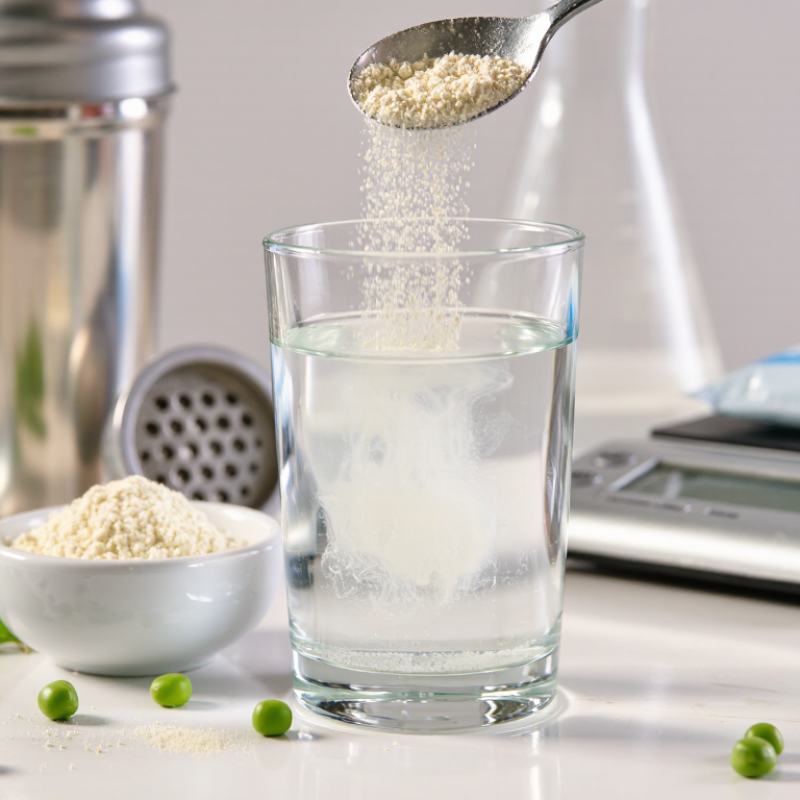
How to Choose Water Soluble Pea Protein?

What Is Water-Soluble Pea Protein?

Water-soluble pea protein is a plant-based protein powder designed to disperse smoothly in water. It usually comes from yellow peas, which are cleaned, milled, and separated from much of their starch and fiber. Further processing reduces particles and improves hydration. The result mixes more easily than standard pea protein.

It is not always truly dissolved at the molecular level. Often, it forms a fine suspension that looks uniform in a glass. Cold water may still reveal slight sediment after several minutes. I have found that shaking for 20–30 seconds gives a better texture than stirring with a spoon. Solubility can also change with acidity, temperature, and mineral content.

When choosing water-soluble pea protein, check the ingredient list and technical data. Look for protein content, solubility test conditions, amino acid information, and independent microbiological testing. A product dispersing in water at 20°C may behave differently in a smoothie or acidic drink. Ask whether the powder contains added emulsifiers, flavors, or sweeteners. These ingredients can improve mouthfeel but may hide a strong earthy note. Taste matters. A clean label does not guarantee a pleasant drink, and a smooth powder may still feel chalky. More testing is needed when comparing products across different suppliers.

How Solubility and Protein Quality Are Evaluated

Choosing water-soluble pea protein requires more than checking the protein percentage on a specification sheet. In practical screening, solubility is tested at different pH levels, temperatures, and powder concentrations. A technician disperses the sample in water, stirs it for a fixed time, then measures protein remaining in the liquid phase. ISO 20483:2013 supports nitrogen-based protein testing, but nitrogen results alone cannot show whether the powder forms sediment or floating particles.

Protein quality needs a separate evaluation. The FAO report Dietary Protein Quality Evaluation in Human Nutrition (2013) recommends examining amino acid patterns and ileal digestibility. Pea protein can be relatively limited in sulfur-containing amino acids, including methionine and cysteine. Therefore, a high protein content does not automatically mean excellent nutritional value. DIAAS or PDCAAS results should be reviewed with their testing conditions, not copied as isolated numbers. The FAO reference pattern for children aged six months to three years lists 57 milligrams of lysine per gram of protein and 27 milligrams of sulfur amino acids.

Look closely at the test details. A sample may dissolve well at pH 7 but perform poorly in an acidic beverage. Heat can also create small, stubborn aggregates. Particle size, mixing speed, water hardness, and storage humidity may change the result. This is where many comparisons become imperfect. A single solubility percentage can hide useful problems. Ask for replicate results, pH curves, sediment photographs, and the laboratory method before choosing a water-soluble pea protein.

How to Choose Water-Soluble Pea Protein?

Protein quality screening against the FAO adult amino-acid reference pattern

How to read the chart: A representative pea-protein amino-acid profile is compared with the FAO adult reference pattern, expressed as milligrams per gram of protein. Lysine and sulfur amino acids are commonly the main nutritional limiting factors in pea protein. For water solubility, compare laboratory results measured at the intended beverage pH, temperature, protein concentration, and mixing time, because solubility can change substantially with processing and formulation.

Pea-protein values are representative literature-based figures and can vary by cultivar, extraction method, and processing. Reference pattern: FAO, Dietary Protein Quality Evaluation in Human Nutrition.

Which Nutritional Features Should You Compare?

When choosing water-soluble pea protein, compare nutrition before judging mixing performance. A smooth drink can still contain little protein or excess sodium. Check protein grams per serving and serving size together. Some labels appear impressive because servings are unusually large. A practical target is a high protein percentage by weight, not a vague “protein-rich” claim. Pea protein is naturally low in sulfur-containing amino acids, especially methionine. Look for a disclosed amino acid profile, and consider pairing it with grains, seeds, or other plant proteins. This creates a more balanced dietary pattern.

Tips: Read the full nutrition panel, not only the front label. Compare calories, carbohydrates, fiber, fat, sodium, and added sugars using equal protein amounts. Solubility does not prove better absorption. Evidence on plant protein digestibility varies with processing and individual tolerance. If available, review digestibility data or independent quality testing. Check whether the product uses isolates, concentrates, or a blend. These forms can differ in protein density and texture. Also examine allergen statements and batch-testing details. Small print matters. Unflavored powder makes comparisons easier, though it may taste earthy in water.

Be realistic about your goal. Athletes may prioritize protein density and leucine content, while everyday users may value fiber and fewer additives. People with sensitive digestion should test a small serving first. Even well-formulated products can cause bloating for some users. I would not treat “instant” or “clean” as nutritional evidence. Those terms need context. A reliable choice has transparent measurements, sensible serving information, and claims that match the label.

How to Check Ingredients, Processing, and Certifications

When choosing water-soluble pea protein, start with the ingredient panel. Look for pea protein isolate or hydrolyzed pea protein, not only “plant protein blend.” Check protein content, sodium, sugar, oils, gums, and added flavors. USDA FoodData Central lists cooked green peas at about 5.4 grams of protein per 100 grams, but concentrated powders differ greatly. Therefore, compare the certificate of analysis, not the front label.

Processing decides whether the powder disperses smoothly. Ask for test results at realistic conditions, such as cold water, neutral pH, and a five-minute mixing period. Instantized powder may use lecithin or agglomeration to reduce floating particles. That is not automatically better. Excessive heat can affect flavor and functionality, while poor drying can create a dusty, earthy note. The FAO, WHO, and UNU protein-quality framework also reminds buyers that amino-acid balance matters, not protein percentage alone. A complete specification should include moisture, microbiological limits, heavy-metal testing, and solubility results.

Certifications need careful reading. HACCP or ISO 22000 supports controlled food-safety systems, but it does not prove excellent solubility. Organic, vegan, and non-GMO claims address different requirements. Check the certificate number, issuing body, scope, and expiry date. The 2024 Global Food Safety Initiative benchmarking framework emphasizes documented verification and continual improvement. Still, paperwork can miss practical defects. I would request a recent batch sample, inspect sediment after ten minutes, and record the mixing temperature. It is a small test, but surprisingly revealing.

How to Select Pea Protein for Different Applications

Water-soluble pea protein should be selected by application, not only by protein percentage. MarketsandMarkets’ Pea Protein Market report projects strong market growth through 2029, driven by beverages, sports nutrition, and dairy alternatives. These products require different technical performance. For ready-to-drink shakes, choose finely milled pea protein with high dispersibility and low sedimentation. A neutral flavor also matters. Even small earthy notes can become obvious in a clear bottle.

Tips: Test the powder in cold water, not only in a laboratory beaker. Check mixing time, foam, grit, color, and sediment after 30 minutes. A practical screening test may reveal more than a specification sheet.

For nutrition bars, moderate solubility may be acceptable, while water retention and texture become more important. For plant-based yogurt, select protein with controlled hydration and stable viscosity. Excessive solubility can sometimes create a thin mouthfeel. This is easy to overlook. For instant powders, review particle size, lecithin content, moisture, and microbiological specifications. The Institute of Food Technologists reports that texture and sensory quality strongly influence consumer acceptance of plant-based foods. Therefore, protein content alone is a weak purchasing guide. In my experience, suppliers should provide solubility results at the intended pH, temperature, and dosage. Results can change significantly between acidic drinks and neutral formulations. A perfect powder does not exist. Product developers must balance taste, cost, clarity, nutrition, and processing tolerance.

FAQS

What is water-soluble pea protein?

It is pea protein powder designed to disperse smoothly in water. It usually comes from yellow peas. It may form a fine suspension, not a true molecular solution. Some sediment can appear after several minutes.

How should I mix it?

Add the powder to cold water. Shake the container for 20–30 seconds. A spoon may leave lumps. Check the drink again after 30 minutes.

Does water-soluble pea protein always dissolve completely?

No. Small particles may remain suspended. Acidity, temperature, minerals, and dosage can change performance. A clear glass does not prove complete dissolution.

What should I check before buying it?

Review protein content and solubility conditions. Check amino acid data and microbiological testing. Ask about sweeteners, flavors, and emulsifiers. A clean label may still taste earthy.

How can solubility be tested properly?

Test different pH levels, temperatures, and powder concentrations. Record mixing time, foam, grit, color, and sediment. Take photographs after 30 minutes. One percentage is not enough.

Does high protein content guarantee high nutritional quality?

No. Protein percentage alone can mislead. Pea protein may contain less methionine and cysteine. Review amino acid patterns and digestibility results. Testing conditions matter.

Is this protein suitable for ready-to-drink beverages?

It can be suitable when sedimentation stays low. Use a finely milled powder with neutral flavor. Test it in the actual beverage. Acidic drinks may behave differently.

What matters when using it in nutrition bars or plant-based yogurt?

Bars may need water retention more than perfect solubility. Yogurt products need controlled hydration and stable viscosity. Excessive solubility can create a thin mouthfeel. This detail is easy to miss.

Can heat or storage affect performance?

Yes. Heat may create stubborn aggregates. Humidity can change powder behavior during storage. Hard water may also affect dispersion. The results are not always consistent.

Is there a perfect water-soluble pea protein?

Probably not. Developers must balance taste, clarity, nutrition, cost, and texture. I may overvalue smooth mixing during screening. A pleasant drink still needs broader testing.

Conclusion

Choosing the right Water Soluble Pea Protein requires more than checking the protein percentage on the label. This ingredient is made from yellow peas and processed to disperse more easily in water, making it suitable for beverages, nutrition powders, and other formulations. When comparing products, consider solubility, mixing performance, texture, amino acid composition, protein content, digestibility, and the presence of essential nutrients. A high-quality option should provide consistent nutrition while minimizing sediment, clumping, or an overly gritty mouthfeel.

It is also important to review the ingredient list, processing methods, and available certifications. Look for simple formulations with limited unnecessary additives, and confirm whether the product meets relevant dietary, allergen, quality, and sustainability requirements. Finally, select pea protein according to its intended application: instant drinks may require rapid dispersion, baked goods may prioritize heat stability, and sports nutrition products may focus on protein density and balanced nutrition. Testing a small sample under real use conditions can help confirm the best choice.


Alexander

Alexander

Alexander is a dedicated marketing professional with a strong understanding of the company’s products, market trends, and customer needs. With a background in strategic communication, content development, and business analysis, he works closely with internal teams to transform complex product......