Natural Fruit Powder is moving from niche ingredient to practical sourcing choice for beverage, bakery, snack, and nutrition brands. But “natural” alone says little about flavor, composition, or consistency. Global buyers need evidence: fruit origin, processing method, ingredient list, batch records, and current certificates of analysis.
The scale of food loss adds context. FAO’s 2023 report estimates that 13.2% of food was lost after harvest and before retail in 2021. Drying and milling can help turn ripe fruit into a shelf-stable ingredient, though powder production does not automatically prevent waste. The World Health Organization recommends at least 400 grams of fruits and vegetables daily for people over ten. Powder may support product development, but it should not be presented as a substitute for whole fruit.
Food scientist Dr. Diane M. Barrett’s research on fruit processing offers a useful buyer’s question: “Does processing preserve the fruit’s identity?” Treat that as a practical lens, not a guarantee. A vivid mango aroma, uniform color, and fine powder are useful clues, but they cannot replace documented testing. Ask suppliers about moisture, microbial controls, added carriers, and traceability. Then compare samples under real production conditions. Small differences matter.
This guide to top Natural Fruit Powder suppliers focuses on those details, alongside capacity, export experience, and communication. Supplier claims still need checking. That part is easy to overlook.
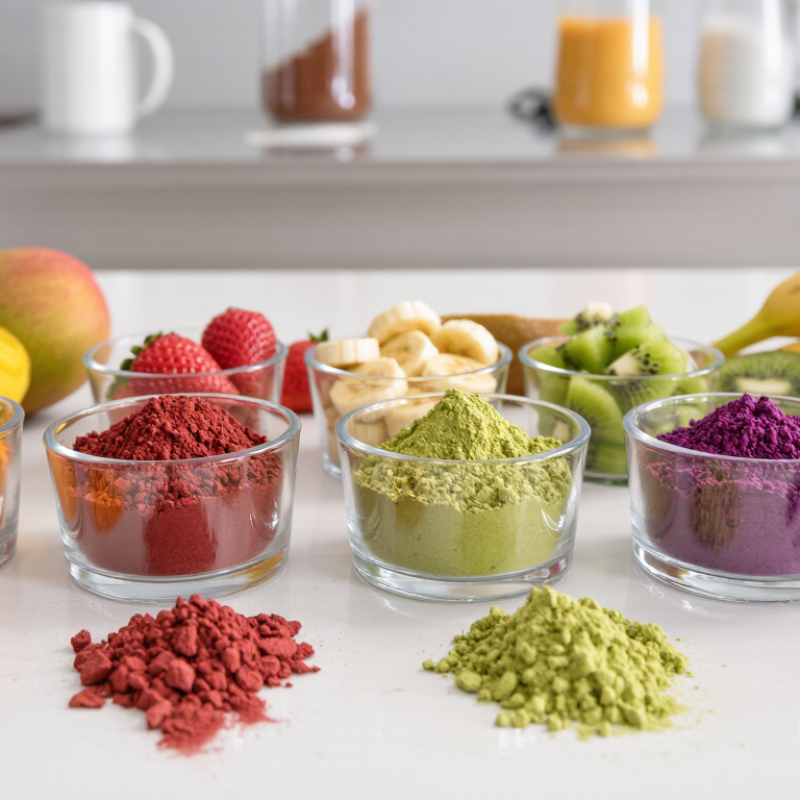
Natural fruit powders are produced by drying fruit and milling it into a fine ingredient. Some are made from whole fruit, while others come from fruit juice. The difference matters. Processing can change aroma, color, acidity, and how easily a powder blends. Heat-sensitive fruits may lose some fresh notes during drying, and storage can affect flavor further. A vivid color alone proves little.
Food makers use fruit powders in smoothies, bakery fillings, yogurt, confectionery, and dry drink mixes. They offer concentrated fruit flavor without adding much moisture, which can help with recipes that need a stable texture. But they do not behave exactly like fresh fruit. In a muffin, for example, a tart berry powder may deepen color and flavor while also changing the balance of sweetness. Small test batches are useful.
For global buyers, ask suppliers about fruit origin, processing method, ingredient declarations, moisture limits, and batch testing. Request samples and check how the powder smells, disperses, and tastes in the intended recipe. Natural variation between harvests is normal, even with careful specifications. That can be frustrating. Still, a clear specification and traceable batch records make differences easier to assess. Don’t judge quality by appearance alone.
Fresh fruit provides a useful nutritional baseline when evaluating fruit powder ingredients. These fruits are commonly used in beverage mixes, bakery products, confectionery, and snack applications. Values represent raw fruit, not powder; drying methods and product formulations can substantially change nutrient concentrations.
Source: USDA FoodData Central. Vitamin C values are in milligrams per 100 g of raw fruit.
For global buyers, supplier evaluation should begin with traceability and measurable quality controls. Ask for the fruit’s country and harvest season, processing method, batch records, and current certificates. Request recent test results for moisture, microbiological limits, pesticide residues, and heavy metals. A bright color alone proves little; drying temperature and storage can affect both color and flavor. Check whether specifications define particle size, solubility, and acceptable variation between batches. The FAO’s 2023 report estimated that 13.2% of food was lost between harvest and retail in 2021. That figure covers food broadly, but it underscores why careful handling and documented supply chains matter.
Tips: Request a sample from the same production lot as the proposed order. Compare its aroma, color, and dispersion in water with the written specification. Ask how the supplier handles out-of-specification results and retains reference samples. A neat certificate is not the whole story; records should match the actual lot. It is easy to overlook packaging, too. Moisture-barrier bags and clear storage instructions help protect powder during shipping. Check whether the supplier can provide an audit trail, not just a sales sheet, and confirm that test methods and laboratories are identified.
Leading natural fruit powder suppliers tend to fall into a few distinct profiles. Some operate close to growing regions, where teams can inspect harvests and process fruit soon after picking. Their powders may retain bright color and a fresh aroma, though seasonal crops can vary. Ask how each batch is identified and whether test results match the lot you will receive. Details matter.
Large export-focused suppliers often emphasize steady volumes, uniform particle size, and established quality systems. These strengths help buyers plan repeat orders. Request specifications for moisture, color, solubility, and microbiological testing, along with packaging details. A fine powder in a sample jar tells only part of the story; it may behave differently in a drink or baked mix.
Smaller specialists may offer unusual fruits, flexible blends, or lower minimum orders. Their service can feel more direct, but production capacity may be limited. Check whether they can provide recent certificates of analysis and explain their drying method clearly. A polished sample can mislead. I would compare several batches, not just the first one, and test the powder in the intended recipe. Supplier profiles look impressive on paper; delivery consistency sometimes deserves more scrutiny than product photos.
A reliable fruit powder supplier should show how quality is controlled from orchard to sealed bag. Ask for a current food-safety certificate, its scope, issuing body, and latest audit date. HACCP-based controls and recognized food-safety management systems can indicate disciplined processes, but buyers should verify certificates with the issuing body. Organic claims need certification valid for the product and destination market. Do not assume a factory-wide certificate covers every powder. Small detail, big difference.
Request a lot-specific certificate of analysis, not a generic sample. It should identify the fruit, production lot, test methods, and results for moisture, microbiology, and relevant contaminants such as pesticide residues or heavy metals. Compare results with your specification and local import requirements. Ask how the supplier controls drying temperature, foreign matter, and cross-contact, then check whether records support the answers. Traceability should link each finished lot to incoming fruit and processing dates. Keep a retained sample when practical; color and aroma can shift during storage. No audit catches everything. A site visit or independent testing may reveal gaps that paperwork misses.
Supplier quality is not a badge; it is repeatable evidence, and even careful buyers should review it periodically.
Global fruit powder sourcing begins with the fruit, not the quote. FAO’s 2024 SDG Progress Report estimates that 13.2% of food was lost between harvest and retail worldwide in 2021; fruits and vegetables had the highest loss rate, about 25.4%. That makes harvest region, processing date, and drying method useful buying details. Request lot-specific moisture and water-activity results, plus microbiological and pesticide-residue reports. Small details matter. A powder can look bright and still cake after a humid voyage.
Export paperwork needs to match the product and destination. Confirm the tariff classification, ingredient description, additive rules, and required certificates with the importer or customs broker before booking. Requirements vary by country and by how the powder is made. One awkward point: a neat audit file is only a starting point; documents may not describe the lot currently offered. Compare certificates with the production batch and shipment labels.
UNCTAD’s Review of Maritime Transport 2024 notes that shipping carries over 80% of world merchandise trade by volume, so sea freight is a common route for bulk ingredients. Ask how liners, sealed bags, and moisture barriers will protect powder from humidity and condensation. Agree on sampling and acceptance criteria before dispatch, not after arrival. This takes extra coordination, and sometimes the paperwork still feels messy. Better to resolve that before the container leaves.
Fruit is dried and milled into a fine powder. Some powders use whole fruit; others use fruit juice. The difference can affect aroma, color, acidity, and blending.
Not exactly. They add concentrated flavor with little moisture, but can change a recipe’s sweetness, texture, or color. Small test batches help.
They appear in smoothies, bakery fillings, yogurt, confectionery, and dry drink mixes. A tart berry powder can deepen the color of a muffin.
Ask about fruit origin, harvest season, processing method, batch records, and current certificates. Check the written specifications for moisture, particle size, and acceptable variation.
Request recent results for moisture, water activity, microbiological limits, pesticide residues, and heavy metals. Confirm that test methods and laboratories are identified. A tidy file can still miss something.
Request a sample from the same production lot as the proposed order. Smell it, check its color, and observe how it disperses in water and your recipe.
Ask about sealed packaging, moisture barriers, and storage instructions. Humidity and condensation can cause caking, even when the powder looks bright. That can be frustrating.
Check the product description, tariff classification, certificates, and destination requirements with the importer or customs broker. Match documents to the production batch and shipment labels. Do this before booking.
This article explores how Natural Fruit Powder is produced from fruit and used in foods, beverages, baking, and other applications worldwide. It explains how buyers can compare suppliers by assessing product range, ingredient transparency, production capacity, customization options, consistency, and communication. Supplier profiles are considered through these practical factors rather than brand names, helping readers identify partners suited to different sourcing needs.
The article also outlines quality standards and certifications that buyers may look for, including systems for food safety, traceability, and quality control. It discusses global sourcing considerations such as sample evaluation, packaging, shelf life, shipping arrangements, documentation, and import requirements. By approaching supplier selection systematically, global buyers can make informed decisions, reduce sourcing uncertainties, and find fruit powders that meet their intended specifications and market needs.