1-888-201-7888 [email protected] 91 Columbia, Aliso Viejo, CA 92656 USA
0%

Global buyers are looking for sports nutrition ingredients that support efficient manufacturing and consistent consumer use. Instant BCAA Powder has become a practical option for drink mixes, sachets, and ready-to-blend formulas. Its quick dispersion can reduce clumping during production and improve the drinking experience. This matters when customers expect smooth texture and reliable flavor in every serving. However, convenience should never replace product verification. A powder may look fine but still require careful testing.

For international sourcing teams, quality begins with evidence. Suppliers should provide current certificates of analysis, ingredient specifications, microbiological results, and traceability records. Manufacturing under recognized GMP systems can strengthen confidence, but buyers should verify the facility and documents independently. Packaging also deserves attention. Moisture-resistant bags, clear batch coding, and suitable storage instructions help protect product quality during long-distance shipping. Small details matter.

Instant BCAA Powder is not a magic solution. Its performance depends on particle size, formulation, flavor system, and processing conditions. A sample that disperses well in a glass may behave differently in a large production tank. That assumption needs testing. Buyers must also review local labeling rules, permitted claims, allergen controls, and import requirements before placing an order. These responsibilities cannot be outsourced completely. This article examines why global purchasers consider Instant BCAA Powder, while addressing its practical limitations, quality expectations, and responsible sourcing considerations. The goal is a clearer purchasing decision, not an exaggerated promise.
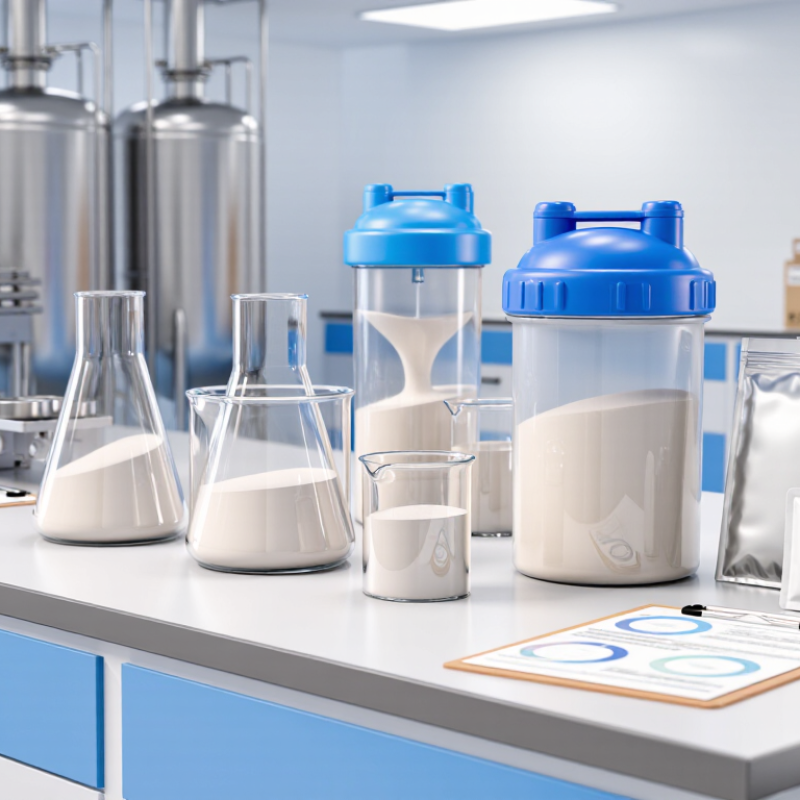
Why Choose Instant BCAA Powder for Global Buyers?

Define BCAAs: Leucine, Isoleucine, and Valine in a 2:1:1 Formula

Why Choose Instant BCAA Powder for Global Buyers?

BCAAs are three essential amino acids: leucine, isoleucine, and valine. The body cannot produce them, so food or supplements must provide them. Leucine supports muscle protein synthesis signaling. Isoleucine contributes to energy metabolism and glucose use. Valine also supports muscle energy during training.

A 2:1:1 formula contains twice as much leucine as either isoleucine or valine. This ratio is widely recognized and easy to measure. It is useful, but it is not magic.

Instant powder can disperse quickly in cold water, which helps users prepare a drink before training or during travel. Global buyers should examine solubility, flavor consistency, and batch stability. Quality documents matter. Ask for identity testing, microbiological results, heavy metal screening, and a clear certificate of analysis. Packaging should also protect the powder from moisture, heat, and repeated opening.

Tips: Mix one serving with 300–500 milliliters of water, then shake for 15–20 seconds. Check the label for the exact amino acid amounts, not only the serving size. Taste and mixing performance can vary between batches. That deserves attention. Buyers should also consider dietary needs, local labeling rules, and professional guidance. BCAAs cannot replace adequate protein, balanced meals, sleep, or a suitable training plan.

Apply ISSN Guidance: 1.7–3.5 g Leucine per Meal for MPS

Why Choose Instant BCAA Powder for Global Buyers?

Apply ISSN Guidance: 1.7–3.5 g Leucine per Meal for MPS

Instant BCAA powder offers a practical way to add leucine around meals and training sessions. The International Society of Sports Nutrition discusses approximately 1.7–3.5 grams of leucine per meal for supporting muscle protein synthesis. This range is guidance, not a personal prescription. It should be considered alongside total protein, meal quality, age, training status, and health conditions.

A soluble powder mixes quickly in water, helping when travel, work schedules, or limited food access disrupt normal meals. Global buyers may also value compact packaging, clear ingredient declarations, batch testing, and reliable storage instructions. A useful serving should state the actual leucine amount, not only the total BCAA weight. That detail reduces guesswork at the shaker.

Check the label carefully. A product may provide less leucine than expected, even when the serving scoop looks generous. Scoop sizes can be inconsistent. A verified serving guide is safer than estimation. Still, BCAAs cannot replace complete dietary protein. Evidence for extra benefits is mixed when daily protein intake is already adequate. People with medical conditions, pregnancy, or restricted diets should seek qualified advice before use.

Why Choose Instant BCAA Powder for Global Buyers?

Applying ISSN guidance: approximately 1.7–3.5 g of leucine per meal to support muscle protein synthesis (MPS).

The chart shows the lower bound, midpoint, and upper bound of the 1.7–3.5 g leucine-per-meal range. For an illustrative 2:1:1 BCAA blend, leucine represents two-fifths of the blend, so approximately 4.25–8.75 g of total BCAA would be needed to provide 1.7–3.5 g of leucine. Actual formulas vary, so buyers should verify the leucine content, serving size, solubility, and labeling of each product.

Reference basis: ISSN-style leucine-per-meal guidance stated in the title. Values are calculated benchmarks, not brand-specific product data.

Test Instantization: Dispersion Time, Wettability, and Sediment Control

Global buyers often ask why instant BCAA powder matters during daily use. Instantization should be tested, not assumed from a product label. A fast bench test can reveal practical differences. Use 250 mL of room-temperature water and add 5 grams of powder. Start a stopwatch immediately. Record the time until most particles disappear from the surface. Repeat the test three times.

Wettability appears in the first few seconds. Some powders float like dry sand, forming small islands before sinking. Others absorb water quickly and disperse with gentle stirring. That surface behavior affects convenience, especially in shakers or clear bottles. Dispersion time should include visible clumps, not only the final cloudy appearance. A practical test also records the number of shakes required.

Sediment control needs patience. Inspect the container immediately, after five minutes, and after ten minutes. Measure any settled layer near the bottom. Clear liquid is not always a perfect result. Fine particles may remain suspended and become visible later. The test is useful, but it is not perfect. One cloudy sample may reflect water temperature or a damp container. Maybe the powder needs a second trial. Results can change with humidity, mineral content, and stirring strength. Reliable evaluation therefore uses identical conditions, written records, and repeated observations.

Verify Global Quality: GMP, COA Testing, Heavy Metals, and Microbiology

Why Choose Instant BCAA Powder for Global Buyers?

Instant BCAA powder dissolves quickly in water, making it practical for sports nutrition and functional beverage production. Global buyers should verify manufacturing controls before judging price or solubility. GMP certification shows that the facility follows documented procedures for hygiene, equipment control, training, and batch traceability. Ask for the current certificate, issuing authority, scope, and expiration date.

A reliable COA should match the exact batch shipped. It should report leucine, isoleucine, and valine levels, moisture, appearance, and testing methods. Independent laboratory results can strengthen confidence. Heavy metal testing should cover lead, cadmium, mercury, and arsenic. Microbiology reports should address total plate count, yeast, mold, and relevant pathogens. Do not accept vague statements such as “food grade” without records. Small errors matter. A missing batch number can weaken traceability.

Tips: Request a recent sample and its matching COA. Compare the lot number on the bag, report, and shipping documents. Check packaging seals, powder flow, odor, and dissolution in cool water. Keep retained samples for internal review. I have found that testing plans are often stronger on paper than in practice, so periodic third-party verification remains useful. Requirements also differ by destination, and one document may not satisfy every market.

Compare Global Buying Value: Dosage, Shelf Life, MOQ, and Landed Cost

Why Choose Instant BCAA Powder for Global Buyers?

Global buyers often compare more than the price per kilogram. A practical review starts with dosage. Check the actual BCAA content per serving, not only the scoop size. A smaller serving can lower shipping weight and daily use costs. However, unclear serving directions create avoidable waste.

Shelf life matters during ocean freight and warehouse storage. Request stability data, production dates, and clear storage instructions. A powder with twelve months remaining may look acceptable, but it can become risky after customs delays. Moisture is another concern. A sealed pouch may perform differently in humid ports. Quality documentation should include batch testing and a current certificate of analysis.

MOQ can shape the real buying decision. A low MOQ supports market testing, while a high MOQ may reduce unit pricing. It can also lock cash into slow-moving inventory. Calculate landed cost carefully. Include freight, insurance, duties, inspection fees, packaging, and local delivery. I have seen buyers choose the lowest quotation and later pay more through extra testing and urgent transport. That mistake is common. A simple spreadsheet helps compare equal dosage, equal shelf life, and equal delivery terms. Supplier audits, sample checks, and written specifications add reliability. Still, even a careful calculation has uncertainty. Exchange rates and port charges can change before shipment.

Why Choose Instant BCAA Powder for Global Buyers? – Compare Global Buying Value: Dosage, Shelf Life, MOQ, and Landed Cost
Buying and Supply Dimension Instant BCAA Powder Standard BCAA Powder BCAA Capsules BCAA Tablets Ready-to-Drink BCAA
Typical BCAA ratio 2:1:1 or 4:1:1
Leucine : Isoleucine : Valine
2:1:1 or 4:1:1 2:1:1 or 4:1:1 2:1:1 or 4:1:1 Usually 2:1:1 or a proprietary blend
Typical BCAA amount per serving 5 g per serving
High dose flexibility
5 g per serving Approximately 3 g per 6 capsules Approximately 3.6 g per 6 tablets Approximately 5 g per bottle
Approximate units needed for a 5 g dose One scoop One scoop About 10 capsules
Varies by fill weight
About 8 tablets
Varies by tablet weight
One ready-to-drink bottle
Format and consumer convenience Mixes with water; easy to adjust serving size; suitable for tubs and sachets Mixes with water; may disperse more slowly or leave more sediment Portable and pre-measured; many units required for a full dose Portable and pre-measured; tablets require swallowing several units Maximum convenience; heavier to ship and store
Typical unopened shelf life 24 months when protected from heat, moisture, oxygen, and direct light 24 months under suitable storage conditions 18–24 months, depending on shell and packaging 18–24 months, depending on compression and packaging 9–12 months is common for shelf-stable products
Typical private-label MOQ 500–1,000 kg or approximately 10,000–20,000 sachets 500–1,000 kg 100,000–250,000 capsules 100,000–250,000 tablets 10,000–30,000 bottles
Packaging efficiency for ocean freight High; dry powder has a high active-content-to-volume ratio High Medium; more packaging components and empty space Medium; higher packaging-to-active ratio Low; water and primary packaging add substantial weight
Indicative product cost at commercial scale US$8.00–10.00 per kg
Non-branded bulk powder benchmark
US$7.00–9.00 per kg US$0.09–0.15 per capsule US$0.07–0.12 per tablet US$0.80–1.40 per bottle
Illustrative landed cost Approximately US$10.50–13.00 per kg
Strong value for high-dose formats
Approximately US$9.20–11.80 per kg Approximately US$15.00–25.00 per kg of BCAA equivalent Approximately US$13.00–22.00 per kg of BCAA equivalent Approximately US$1.20–2.00 per 5 g serving
Dosage cost for approximately 5 g BCAA Approximately US$0.053–0.065 per serving Approximately US$0.046–0.059 per serving Approximately US$0.075–0.125 per serving Approximately US$0.065–0.110 per serving Approximately US$1.20–2.00 per serving
Best fit for global buyers Sports nutrition brands, sachet programs, e-commerce packs, and markets requiring flexible serving sizes Cost-focused powder products with less emphasis on rapid dispersion Travel-friendly supplement ranges and capsule-focused product lines Tablet-focused supplement ranges with fixed serving formats Convenience channels, gyms, vending, and chilled or ready-to-drink distribution
Primary purchasing consideration Balance instant dispersibility, dose flexibility, shelf life, and freight efficiency Lower powder cost may be offset by weaker dispersion performance Higher packaging, filling, and per-dose costs Higher compression, coating, and per-dose costs Highest logistics, warehousing, and expiry-risk exposure
Benchmark assumptions: Figures are indicative planning ranges for non-branded products and are not quotations from any company. Landed-cost examples assume approximately 1,000 kg by ocean freight, standard export packaging, normal customs clearance, and import duty estimates of roughly 5–10%; destination VAT, local warehousing, testing, certification, insurance, and last-mile delivery are excluded. Actual dosage, shelf life, MOQ, freight, duty, and landed cost vary by formula, packaging, origin, destination, regulatory requirements, and order volume.

FAQS

What are BCAAs?

BCAAs are leucine, isoleucine, and valine. The body must obtain them from food or supplements. Leucine supports muscle protein synthesis signaling. Isoleucine and valine support energy use during training.

What does a 2:1:1 formula mean?

It contains twice as much leucine as isoleucine or valine. This ratio is easy to measure and widely recognized. It is useful, but not magic.

Why does instant powder matter?

Instant powder can disperse quickly in cold water. This helps before training or during travel. A practical drink may require only a shaker and water. Speed alone does not prove quality.

How can buyers test powder dispersion?

Add five grams to 250 milliliters of room-temperature water. Start timing immediately after adding the powder. Record when most surface particles disappear. Repeat the test three times. Test it again if results seem unusual.

What should a dispersion test record?

Record floating particles, visible clumps, shaking time, and settled material. Inspect the container immediately, after five minutes, and after ten minutes. A cloudy drink is not automatically a failure. Water temperature and stirring strength can change results. Keep records.

Which quality documents should buyers request?

Request a current GMP certificate and a batch-specific COA. The COA should list amino acid levels, moisture, appearance, and testing methods. Heavy metal testing should cover lead, cadmium, mercury, and arsenic. Microbiology results should include yeast, mold, and relevant pathogens. Vague claims are insufficient.

How can buyers confirm batch traceability?

Compare the lot number on the bag, COA, and shipping documents. Check the certificate issuer, scope, and expiration date. Keep a retained sample for internal review. Small errors matter. Missing numbers weaken traceability.

How should instant BCAA powder be stored and checked?

Packaging should resist moisture, heat, and repeated opening. Inspect the seal, powder flow, odor, and dissolution in cool water. Use dietary guidance and follow destination-market labeling rules. BCAAs cannot replace protein, balanced meals, sleep, or suitable training. The review may be imperfect.

Conclusion

Instant BCAA Powder provides global buyers with a practical way to source branched-chain amino acids—leucine, isoleucine, and valine—in a balanced 2:1:1 formula. Leucine plays a central role in muscle protein synthesis, and applying the ISSN guidance of approximately 1.7–3.5 g of leucine per meal can help buyers evaluate whether a product delivers a meaningful serving. Instantization should also be confirmed through dispersion time, wettability, and sediment-control testing to support consistent mixing in different applications.

For international purchasing, quality verification is equally important. Buyers should review GMP compliance, a complete COA, heavy-metal screening, and microbiological test results before approval. Commercial value depends not only on the unit price, but also on effective dosage, shelf life, minimum order quantity, shipping conditions, and total landed cost. A clear comparison of these factors helps buyers select a reliable Instant BCAA Powder that balances performance, quality, and supply-chain efficiency.


Eleanor

Eleanor

Eleanor is a dedicated marketing professional with a strong understanding of the company’s products, customers, and industry landscape. Through her experience in market research, content strategy, and customer communication, she transforms complex product information into clear, practical, and......