Direct Factory Bulk Ingredients Documented with Batch-Specific COA, USDA Organic, Kosher, and Halal Certifications
Understanding Market Shift, Bioactive Extraction Protocols, and B2B Sourcing Risk Management
The global demand for functional plant-based hydrocolloids, prebiotic fiber matrices, and natural metabolic buffering agents has propelled Nopal Powder (derived from Opuntia ficus-indica) into the spotlight of international nutraceutical and food science procurement. As brand owners in North America, Europe, and Asia-Pacific seek high-purity, clean-label raw materials to support blood glucose management, digestive health, and cellular lipid control, China has emerged as a premier center for high-capacity, technological-grade Nopal powder manufacturing and custom spray-drying refinement.
This comprehensive technical whitepaper evaluates the industrial ecosystem of China Top Nopal Powder Factories & Suppliers. It examines raw material cultivation, advanced low-temperature dehydration, mucilage recovery, quality control standardization, regulatory documentation, and strategic procurement frameworks designed to minimize batch-to-batch variance for commercial formulators.
Composed of arabinogalactan-protein complexes and galacturonic acid backbones, creating a protective matrix for gastrointestinal integrity and controlled nutrient absorption.
Rich in quercetin, kaempferol, and betanin pigments, providing robust free-radical scavenging capacity and cellular oxidative stress defense in metabolic formulations.
Delivers a dual-action dietary fiber profile (over 45% total dietary fiber) ideal for weight management, satiety enhancement, and prebiotic gut microbiome modulation.
Procurement directors must evaluate raw material options through rigorous chemical and economic parameters. While traditional sourcing relied heavily on rustic sun-dried pads from Latin America, modern pharmaceutical and nutraceutical applications demand strict control over microbiological loads, heavy metal residues, and water activity ($a_w$).
Top Chinese processing facilities leverage modern agricultural bases in optimized microclimates paired with automated, closed-loop extraction plants. The table below outlines the analytical performance metrics contrasting crude sun-dried Nopal meal with Chinese low-temperature spray-dried and vacuum-belt dried extract powders.
| Specification / Analytical Parameter | Standard Rustic Meal (Sun-Dried) | China Premium Spray-Dried Nopal Powder | Enzymatic Hydrolyzed Soluble Nopal Fiber |
|---|---|---|---|
| Botanical Identity Assay | Opuntia ficus-indica (Variable) | Opuntia ficus-indica (HPTLC Verified) | Opuntia ficus-indica (Standardized) |
| Total Dietary Fiber (TDF) | 30% – 38% | 45% – 58% | > 70% Soluble Fraction |
| Mucilage Content (Viscosity Index) | Low / Degraded (< 150 cPs) | High Integrity (600 – 1200 cPs) | Controlled Low Viscosity (< 50 cPs) |
| Moisture & Water Activity ($a_w$) | > 9.0% | $a_w > 0.60$ | < 5.0% | $a_w < 0.30$ | < 4.0% | $a_w < 0.25$ |
| Heavy Metal Compliance (Pb, As, Cd, Hg) | Inconsistent / Needs Testing | USP / EP Compliant (< 10ppm total) | Strict California Prop 65 Limits |
| Solubility in Cold Water | Insoluble (Suspension only) | Partially Dispersible (Gel-forming) | 100% Water Soluble (Clear) |
Leading Chinese original equipment manufacturers (OEM) and extraction mills have standardized their production workflows to comply with international cGMP, FSMA, and EU Regulation (EC) No 852/2004. Sourcing managers should inspect three critical phases of the manufacturing process when auditing suppliers:
Fresh cladodes (pads) of Opuntia ficus-indica are harvested at peak vegetative growth (typically 6 to 12 months of age) when mucilage concentration and enzyme activity are optimal. Leaves are washed with sanitized ozone-injected water systems to eliminate surface debris and soil microflora without leaving chemical chlorine residues.
Traditional thermal drying degrades heat-sensitive flavonoids (such as Isorhamnetin glycosides) and caramelizes native sugars. Tier-1 Chinese manufacturers utilize rapid vacuum belt drying or closed-circuit low-temperature spray drying (inlet temp 140°C–160°C, outlet temp < 75°C). This preserves the native tertiary structure of functional proteins and polysaccharides. The dried matrix is then micronized using air-sweep pulverizers to standard mesh specifications ranging from 80 mesh to 300 superfine mesh.
Before bulk packaging in multi-layer aluminum foil bags with desiccants, batches undergo non-thermal steam sterilization or irradiation (upon customer specification) to guarantee total aerobic plate counts remain under 1,000 CFU/g while maintaining zero pathogens (E. coli, Salmonella, Staphylococcus aureus negative in 25g).
As consumer awareness transitions from basic dietary supplementation to evidence-based metabolic modulation, purchasing executives must align their supply chains with four decisive industry trends:
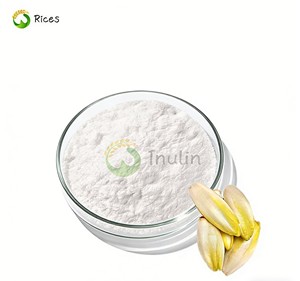
Formulators are moving away from single-ingredient fiber products. Combining Nopal powder’s slow-fermenting insoluble cellulose with fast-fermenting soluble Chicory Root Inulin or Fructo-Oligosaccharides creates a full-spectrum prebiotic matrix that nourishes both proximal and distal colon microbiota.
Nopal powder is increasingly incorporated into bakery premixes, instant nutritional beverages, and keto-friendly foods. Its high viscosity and mucilage retard starch enzymatic breakdown, reducing postprandial blood glucose spikes without artificial synthetic additives.
Global brands now require full agricultural traceability. Leading Chinese factories have secured USDA Organic, EU Organic, and JAS certifications. Batch-specific isotope ratio mass spectrometry (IRMS) is used to verify 100% natural botanical origin.
Traditional raw Nopal powder suffers from poor wettability. Modern Chinese manufacturers are introducing fluid-bed agglomerated and instantized grades designed for seamless dissolution in ready-to-drink (RTD) beverage sachets and clear stick packs.
As an industry-trusted global supplier and technical bridge between accredited manufacturing bases and multinational brand owners, Sunland Nutrition Inc (celaniebio.com) provides unmatched B2B procurement advantages:
When requesting quotes and evaluating supplier samples from China, procurement teams should follow this structured testing matrix to ensure optimal cost-to-quality performance:
Direct Insights for Purchasing Managers, QA Engineers, and Formulation Scientists
Every commercial batch is accompanied by a comprehensive technical dossier including a batch-specific Certificate of Analysis (COA), Technical Data Sheet (TDS), Safety Data Sheet (SDS), Allergen Statement, GMO-Free Certificate, and Nutritional Analysis. For certified organic orders, USDA Organic / NOP transaction certificates are issued per shipment.
We offer free laboratory-scale samples (100g – 500g) with matching analytical documentation for qualified formulation trials. Commercial Minimum Order Quantities start at 25 kg (standard fiber drum with double inner PE liner) for stocked items, scaling to full-container loads (FCL) for direct factory contracts.
Raw materials are harvested exclusively from audited agricultural zones monitored for soil purity. Every production lot undergoes GC-MS/MS and LC-MS/MS testing screening for over 400 multi-pesticide residues to ensure full compliance with US FDA, USP, and European Pharmacopoeia (EP) strict limits.
Yes. We provide custom milling down to 300 superfine mesh for smooth beverage mouthfeel, as well as coarse granular grades for tableting compression. Additionally, our R&D department can pre-blend Nopal with complementary fibers such as Inulin, FOS, or Natural Sweeteners (Allulose, Monk Fruit, Stevia) in a single homogenized drum.
When stored in its original unopened packaging in a cool, dry place away from direct sunlight and moisture (temperature < 25°C, relative humidity < 60%), pure Nopal Powder maintains full bioactive potency and microbiological stability for 24 months from the manufacturing date.
For orders fulfilled from our US warehouses in California, standard transit lead time is 1 to 5 business days via freight carrier. Direct factory shipments from China typically run 3 to 5 weeks depending on shipping terms (FOB, CIF, DDP) and air vs. ocean transport choices.
Request batch sample kits, technical specification sheets, and competitive tier-volume pricing for your next production run.
Contact Us