Explore our premier catalog of fermentation-derived L-Arginine grades, specialty salt complexes, and high-solubility prebiotic carrier matrices. All items are produced in cGMP-certified facilities with full audit trails.
The global market for bulk L-Arginine powder has undergone a seismic technological transition over the past two decades. Historically reliant on animal-keratin hydrolysate extraction methods—which carried risks of batch variance, residual heavy chemical contamination, and strict regulatory barriers in Europe and North America—the Chinese biotech ecosystem led a industrial shift toward strain-engineered microbial bio-fermentation. Today, top-tier Chinese exporters utilize advanced non-GMO strains of Corynebacterium glutamicum and mutant Escherichia coli to synthesize high-purity L-Arginine directly from plant-derived carbohydrate substrates (such as corn starch glucose syrup).
Modern Chinese fermenters employ metabolic engineering to block feedback inhibition pathways in C. glutamicum. This innovation increases carbon conversion yields from glucose to L-Arginine by over 42%, suppressing metabolic byproducts such as L-ornithine and L-citrulline, resulting in raw fermentation broths with higher baseline purity.
Downstream purification techniques have shifted from multi-stage batch precipitation to continuous, automated ion-exchange chromatography paired with ultrafiltration nanofiltration membranes. This eliminates pyrogens, endotoxins, and residual proteins, ensuring compliance with strict injection-grade and parenteral standards.
Leading Chinese export factories no longer compete solely on chemical purity; physical morphology is a major differentiator. Utilizing fluid-bed granulation and jet-milling, manufacturers supply tailored mesh profiles ranging from granular direct-compression (DC) forms to 200-mesh micronized powders for instantaneous dissolution in pre-workout mixes.
Understanding the molecular variance between L-Arginine variants is critical for formulators targeting specific pharmacokinetics, solubility limits, and sensory attributes.
| Chemical Variant | Molecular Weight | Nitrogen Content | Aqueous Solubility (25°C) | pH Value (10% Solution) | Primary Application Target |
|---|---|---|---|---|---|
| L-Arginine Base | 174.20 g/mol | 32.1% (Highest) | 182 g/L (Moderate) | 10.5 – 12.0 (Strong Alkaline) | Tablets, Capsules, Dietary Supplements |
| L-Arginine HCl | 210.66 g/mol | 26.6% | 730 g/L (Exceptional) | 5.5 – 6.5 (Neutral) | RTD Beverages, Injectable Solutions, Syrups |
| A-AKG 2:1 Salt | 494.51 g/mol | 22.6% | High Solubility | 3.8 – 4.5 (Mildly Acidic) | Pre-Workout Sports Powders & Nitric Oxide Boosters |
| L-Arginine Nitrate | 237.21 g/mol | 29.5% | High Solubility | 4.5 – 5.5 (Acidic) | Dual-Mechanism Vasodilation Formulas |
As global demand for amino acid raw materials scales across sports nutrition, clinical infant formulas, cardiovascular health therapeutics, and animal feed additives, global brand procurement teams must navigate evolving market dynamics. China controls over 70% of the worldwide bulk L-Arginine refining capacity. Procurement managers who understand regional supply dynamics gain significant cost, compliance, and risk-mitigation advantages.
China’s dual-carbon energy policies are reshaping production in primary chemical parks in Shandong, Ningxia, and Inner Mongolia. Top exporters are integrating solar thermal energy and closed-loop water recycling systems into fermenters. B2B buyers must partner with suppliers operating in verified environmental compliance zones to avoid seasonal production curtailments.
To hedge against maritime supply chain bottlenecks and tariff fluctuations, major brand owners are adopting "China Factory Direct + Local Staged Warehousing" models. Leading Chinese exporters now maintain permanent stock positions in West Coast (California) and East Coast US hubs, enabling 48-hour domestic freight dispatch for blanket purchase order call-offs.
Unmodified L-Arginine Base possesses a sharp, bitter alkaline sensory profile that challenges formulators of functional foods, powders, and gummies. The procurement trend is shifting toward micro-encapsulated L-Arginine (using hydrogenated vegetable oils or ethylcellulose coatings) and high bulk-density granulates (0.60–0.70 g/mL) that streamline high-speed tablet compression without capping.
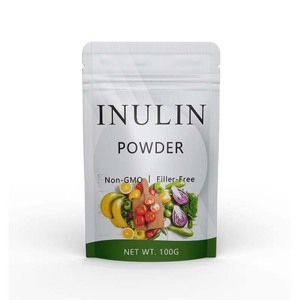
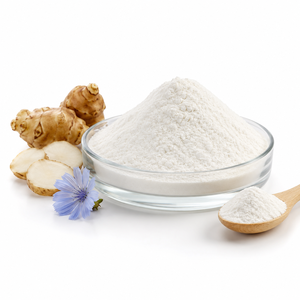
Brand owners are reducing logistical complexity by ordering custom pre-blended functional bases directly from Chinese mills. By co-milling L-Arginine with L-Citrulline, Beta-Alanine, and water-soluble prebiotic dietary fibers (such as chicory root inulin or resistant dextrin), manufacturers lower batching labor costs and eliminate raw material cross-contamination risks at their own packing facilities.
In accordance with Google’s Search Quality Rater Guidelines for YMYL (Your Money Your Life) health and ingredient manufacturing topics, demonstrating rigorous expertise, authority, and trustworthiness requires total transparency in analytical validation. Tier-1 Chinese exporters adhere to strict multi-compendial testing frameworks:
Every production lot undergoes derivatization HPLC testing to verify an active optical purity assay between 98.5% and 101.5% on a dried basis. Optical rotation ($\alpha$) is precisely calibrated using polarimetry ($[\alpha]_D^{20} = +26.9^\circ \text{ to } +27.9^\circ$) to guarantee zero racemic D-arginine contamination.
Utilizing Inductively Coupled Plasma Mass Spectrometry, finished lots are verified to strict toxicological thresholds: Lead (Pb) < 0.5 ppm, Arsenic (As) < 0.5 ppm, Cadmium (Cd) < 0.5 ppm, Mercury (Hg) < 0.1 ppm, well below USP <232> and EP limits.
Each batch is subjected to rigorous incubation testing: Total Aerobic Microbial Count (TAMC) < 1,000 CFU/g, Total Yeasts and Moulds Count (TYMC) < 100 CFU/g, with absolute absence of Salmonella, E. coli, and Staphylococcus aureus. For pharmaceutical grades, bacterial endotoxins are validated below 0.5 EU/mg.
A standard COA provided with every wholesale shipment includes the following verified parameters:
✔ Appearance: White crystalline powder
✔ Identification (IR / HPLC): Matches USP reference standard
✔ Loss on Drying: $\le 0.50\%$ (105°C, 3 hours)
✔ Residue on Ignition: $\le 0.10\%$
✔ Clarity & Color of Solution: Clear & Colorless ($\ge 98.0\%$ transmittance)
✔ Chloride ($Cl^-$): $\le 0.02\%$ (for Base) / $16.5 - 17.1\%$ (for HCl)
✔ Sulfate ($SO_4^{2-}$): $\le 0.03\%$
✔ Related Substances: Individual impurity $\le 0.2\%$, Total $\le 0.5\%$
✔ Residual Solvents (GC): Meets ICH Q3C guidelines (Ethanol/Methanol free)
✔ Particle Sizing: Standard 80 mesh ($100\%$ pass through 60 mesh)
Sourcing directly from Chinese factories often presents operational challenges: language barriers, timezone delays, regulatory compliance disconnects, and unpredicted freight delays. Our enterprise model bridges top-tier Chinese manufacturing with domestic US sales, regulatory, and logistics support—giving contract manufacturers the best of both worlds.
We operate audited bio-fermentation facilities in primary industrial hubs in China. By removing secondary trading middlemen, we offer factory-direct container pricing while maintaining rigorous oversight over every batch.
We supply comprehensive quality packages for immediate vendor approval by your QA department. Every file includes batch COAs, Flow Charts, Allergen Statements, Non-GMO Declarations, TSE/BSE Statements, Kosher/Halal Certificates, and ISO/FSSC accreditation files.
In addition to container-load factory export contracts, we hold strategic inventory reserves in California warehouses. Stocked items ship within 24 to 48 hours via national freight carriers for immediate pilot batch production.