


The global curcumin market is undergoing a structural transition driven by heightened consumer awareness around systemic inflammation, joint mobility, cellular longevity, and cognitive health. As commercial formulators and procurement directors evaluate trusted curcumin powder manufacturers, the criteria for vendor qualification have expanded beyond mere price-per-kilogram metrics. Today, leading dietary supplement brands, pharmaceutical formulators, and functional beverage giants prioritize analytical transparency, lot-to-lot bio-equivalence, heavy metal control, solvent residue compliance (USP/EP standards), and robust supply chain continuity.
Curcumin (diferuloylmethane), the primary hydrophobic polyphenol extracted from the rhizomes of Curcuma longa L., naturally constitutes only 2% to 6% of raw turmeric powder. Producing a high-potency, standardized 95% curcuminoid extract requires advanced multi-stage solvent extraction, crystallization, and purification technologies. Sunland Nutrition Inc., operating from Aliso Viejo, California, bridges global manufacturing capabilities with stringent US quality management standards—providing global brand owners with a single, accountable partner for fully documented botanical raw materials.
Information Gain Metric: Standard commercial grade "95% Curcumin" is rarely pure curcumin alone. True standardized extracts comprise a natural triad of curcuminoids: Curcumin I (~75–81%), Demethoxycurcumin / DMC (~15–19%), and Bisdemethoxycurcumin / BDMC (~2.5–6%). High-performance liquid chromatography (HPLC) testing by accredited third-party laboratories is essential to verify this precise ratio and screen against synthetic petroleum-derived adulterants.
Historically, the commercial application of native curcumin was limited by its poor oral bioavailability, low aqueous solubility (<11 µg/mL at neutral pH), rapid hepatic metabolism, and quick systemic elimination. To address these physiological barriers, prime manufacturers have developed proprietary downstream processing methods that yield targeted functional grades:
Extracted using food-grade ethanol and ethyl acetate systems. Ideal for traditional hard-shell capsules, softgels, and standardized botanical tablet compression.
Utilizes food-grade carrier matrices (such as gamma-cyclodextrin or acacia fiber) to achieve complete dispersibility in cold liquids without sedimentation.
Hydrogenated, color-free derivative offering superior antioxidant capacity, skin-lightening potency, and metabolic stability for premium cosmetics and nutricosmetics.
When selecting raw materials for new product development (NPD), formulation engineers must weigh solubility, active payload, sensory profiles, and cost structure. The matrix below outlines Sunland Nutrition's core commercial specifications:
| Ingredient Grade | Curcuminoid Payload | Physical Appearance | Solubility Profile | Primary Target Application |
|---|---|---|---|---|
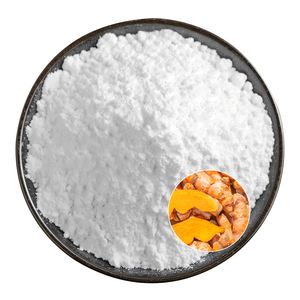
| Tetrahydrocurcumin 95% CAS: 36062-04-1 |
≥ 95.0% (THC) | Off-White to Cream Powder | Lipophilic / Soluble in Ethanol | Topical Skincare, Nutricosmetics, Anti-Aging Formulas |
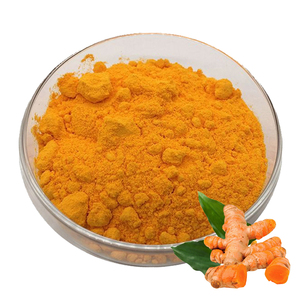
| Turmeric Extract 95% Standard HPLC |
≥ 95.0% Total Curcuminoids | Deep Orange-Yellow Powder | Insoluble in Water / Hydrophobic | Hard Capsules, Softgels, Tablet Blends |
| Water-Soluble Curcumin 10% Nano-Emulsion |
10.0% – 12.0% Active | Light Yellow Fine Powder | 100% Cold Water Dispersible | RTD Beverages, Functional Shots, Effervescent Tablets |
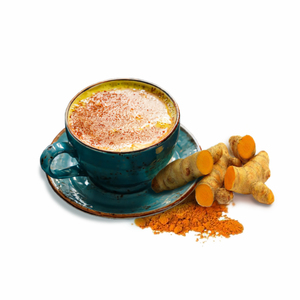
| Organic Turmeric Root Powder USDA Certified |
3.0% – 5.0% Natural Curcumin | Golden Yellow Ground Rhizome | Partial Suspension | Functional Foods, Golden Milk Blends, Herbal Teas |
The strategic sourcing of botanical extracts has shifted from reactive spot-market purchasing to structured long-term contract manufacturing agreements. Enterprise buyers are navigating three pivotal industry trends:
Due to raw material cost pressures, illicit blending of petroleum-derived synthetic curcumin with natural Curcuma longa extracts remains a challenge in low-tier supply chains. Industry-leading manufacturers now enforce mandatory AMS Carbon-14 radiocarbon dating. Natural curcumin exhibits bio-based carbon levels (>95% pMC), whereas synthetic alternatives register zero 14C content. Sunland Nutrition provides verified bio-based testing upon request, safeguarding brand equity against regulatory recall.
Global regulatory bodies, including the US FDA and European Food Safety Authority (EFSA), have tightened limits on toxic extraction solvents (Class 1 & Class 2 solvents like EDC and benzene) and sterilizing agents such as Ethylene Oxide (ETO) and 2-Chloroethanol. Premium manufacturers utilize pure food-grade Ethanol and Ethyl Acetate, validated by GC-MS headspace analysis to guarantee residual solvents fall well below 50 ppm—far stricter than standard pharmacopeial thresholds.
Consumer preferences continue to migrate toward clean-label claims. Sourcing organically farmed turmeric roots from audited agrarian regions ensures freedom from synthetic pesticides, organophosphates, and heavy metals (Lead, Cadmium, Arsenic, Mercury). Sunland Nutrition maintains NOP-compliant USDA Organic certificates for both full-spectrum root powders and high-purity refined extracts.
Established in 2012 in Aliso Viejo, California, Sunland Nutrition Inc. serves as a trusted raw material partner for nutraceutical, sports nutrition, beverage, and animal health manufacturers across North America, Europe, and the Asia-Pacific region. Our business model resolves key pain points in global ingredient sourcing:
Every extraction facility in our supply network undergoes strict on-site audits, process safety evaluations, and batch-to-batch consistency benchmarking before approval.
Every shipment is accompanied by a batch-specific COA, Technical Data Sheet (TDS), MSDS, Allergen Statement, Non-GMO declaration, and heavy metal/microbiology panels.
Strategically located US warehouse facilities ensure 1 to 3 business day domestic dispatch, eliminating stock-out risks and mitigating international shipping delays.
Procurement teams and R&D formulators frequently consult us regarding technical specs and order logistics. Here are detailed responses to the most critical sourcing questions:
Every shipment includes a lot-specific Certificate of Analysis (COA) detailing HPLC assay (total curcuminoids breakdown), particle size mesh analysis, loss on drying, heavy metals (Pb, As, Cd, Hg via ICP-MS), micro-panel (TPC, Yeast & Mold, E. coli, Salmonella), and residual solvent levels. Additional certifications such as USDA Organic, Kosher, Halal, and C-14 origin reports are available upon request.
We mandate dual-layer testing protocols: quantitative HPLC analysis to confirm the natural ratio of Curcumin, Demethoxycurcumin (DMC), and Bisdemethoxycurcumin (BDMC), combined with periodic Carbon-14 (14C) radiocarbon analysis. Synthetic curcumin derived from petroleum chemicals lacks 14C isotopes, allowing instant detection of adulterated batches.
Standard inventory items held in our California warehouses carry an MOQ of 25 kg (standard fiber drum packaging) and ship within 1 to 3 business days. For customized mesh sizes, specialty micro-encapsulations, or direct-from-mill contract orders, lead times range from 4 to 6 weeks depending on custom production runs and certification requirements.
For standard hard gelatin or HPMC capsules and tablet compression, Standardized Curcumin 95% Powder is the cost-effective industry benchmark. For clear or cloud RTD beverages, functional shots, and effervescent sticks, we recommend our 10% Water-Soluble Nano-Curcumin Powder, which completely disperses without fallout or ringing.
Yes. We provide 100g to 500g bench evaluation samples accompanied by matching batch COAs to qualified product developers and QA managers. This allows your R&D team to verify solubility, organoleptic profiles, flowability, and active assay prior to full commercial commitment.
Unopened standardized curcumin powder has a shelf life of 24 months when stored in original double PE-lined fiber drums in a cool, dry place away from direct sunlight, light sources, and heat (<25°C and relative humidity <60%). Curcuminoids are light-sensitive and subject to photodegradation if exposed to strong UV illumination.
Connect with Sunland Nutrition’s technical ingredient specialists to request full specification sheets, lot-specific COAs, pricing schedules, and bench-scale formulation samples.