Executive Summary: Navigating China-to-Hamburg Potassium Citrate Procurement
As Northern Europe's leading industrial logisitics hub, the Port of Hamburg (Burchardkai / Altenwerder Terminals) serves as the gateway for functional food ingredients, pharmaceuticals, and industrial buffering agents distributed across Germany, Scandinavia, and the broader DACH region. Among essential organic acid salts, Potassium Citrate (Tripotassium Citrate; CAS: 6100-05-6 / 866-84-2) has experienced unprecedented growth in European demand driven by aggressive sodium-reduction initiatives, the expanding sports nutrition sector, and specialized pharmaceutical formulations.
For European procurement directors, supply chain managers, and formulation chemists, establishing a resilient, cost-effective, and fully compliant pipeline with top-tier Chinese factories is a strategic imperative. China represents over 70% of the world’s refined citric acid and citrate salt manufacturing capacity. However, bridging the geographic and regulatory distance between Chinese chemical synthesis plants and Hamburg food/pharma manufacturers requires deep technical alignment with European Union standards—including EU Regulation (EC) No 1333/2008 for food additives (E332ii), European Pharmacopoeia (EP) monographs, and REACH registrations.
Purity & Technical Consistency
Monohydrate ($K_3C_6H_5O_7 \cdot H_2O$) and Anhydrous grades manufactured via high-yield enzymatic fermentation followed by ultra-pure potassium hydroxide neutralization, guaranteeing assay values between 99.0% and 101.0%.
Customs & Tariffs (HS 2918150000)
Seamless clearing through Hamburg customs with complete TARIC classification, origin documentation, REACH authorization dossiers, and full heavy metal ICP-MS analytical reporting per container lot.
Maritime Freight Hub
Direct liner services connecting major Chinese ports (Qingdao, Ningbo, Shanghai) to Hamburg in 28 to 34 days, backed by local buffer warehousing in the Hamburg metropolitan logistics zone.
Chemical Architecture & Standard Monograph Comparison
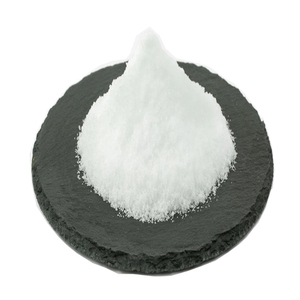
Potassium Citrate is the potassium salt of citric acid, characterized by its white crystalline appearance, saline taste, and slight deliquescence in moist air. In industrial applications across Germany, choosing between Monohydrate and Anhydrous forms depends on specific formulation parameters, moisture sensitivity, and compression technology.
Monohydrate vs. Anhydrous Technical Benchmarks
Understanding the exact thermodynamic and physical distinctions ensures proper stability during shelf-life testing and prevents caking in humid storage environments like maritime transport containers.
| Analytical Parameter |
Potassium Citrate Monohydrate |
Potassium Citrate Anhydrous |
EP / USP Regulatory Standard |
| Chemical Formula |
$K_3C_6H_5O_7 \cdot H_2O$ |
$K_3C_6H_5O_7$ |
Monograph Compliant |
| CAS Registry Number |
6100-05-6 |
866-84-2 |
Global Chemical Index |
| Assay Content (Dry Basis) |
99.0% – 101.0% |
99.0% – 100.5% |
Title 21 CFR / FCC X |
| Loss on Drying (LOD) |
3.0% – 6.0% (at 180°C) |
≤ 1.0% Max |
USP <731> / EP 2.2.32 |
| Solubility in Water (25°C) |
~ 154 g / 100 mL |
~ 165 g / 100 mL |
Freely Soluble |
| pH (5% Aqueous Solution) |
7.5 – 9.0 |
7.5 – 9.0 |
USP <791> Alkaline Buffer |
| Heavy Metal Limits (As Pb) |
< 5 ppm (0.0005%) |
< 5 ppm (0.0005%) |
EU Regulation (EU) 231/2012 |
| Arsenic (As) / Lead (Pb) |
As < 1 ppm; Pb < 1 ppm |
As < 1 ppm; Pb < 1 ppm |
Strict EU Food Grade Spec |
Our manufacturing partner mills utilize proprietary crystal growth controls that allow customization of bulk density (ranging from 0.65 g/mL for fluffy fine powders up to 0.95 g/mL for heavy granular grades) and particle size mesh (from 12-40 mesh for direct tableting to 80-100 mesh for instant beverage dissolving).
Localized Industrial Application Scenarios in Germany & DACH Region
Germany’s stringent food purity laws (such as the Zusatzstoff-Zulassungsverordnung and national beverage standards) demand that raw material inputs exhibit uncompromised chemical purity and complete batch-to-batch traceabilty. Potassium Citrate fulfills vital functional roles across key Northern German commercial sectors:
1. German Beverage & Brewing Industry
In modern German beverage plants—particularly near traditional brewing and soft drink hubs in Lower Saxony and Hamburg—Potassium Citrate acts as a premier pH buffer and flavor stabilizer. It modulates acidity in low-calorie fruit juices, carbonated soft drinks, and functional isotonic beverages without introducing a salty sodium profile, directly assisting manufacturers complying with Germany's Nationale Reduktions- und Innovationsstrategie (National Salt & Sugar Reduction Strategy).
2. Pharmaceutical & Nutraceutical Formulations
Used widely as a systemic alkalinizer and urological agent to prevent kidney stone recurrence (nephrolithiasis management). Direct-compression (DC) grade Potassium Citrate granular materials imported via Hamburg supply major pharmaceutical cleanroom facilities across Northern Germany, producing high-potency effervescent tablets, sachets, and hard capsules meeting Ph. Eur. specifications.
3. Dairy & Processed Food Stabilization
Under EU Food Additive designation E332(ii), Potassium Citrate functions as an emulsifying salt, sequestering agent, and stabilizer in condensed milk, processed cheeses, creams, and plant-based milk alternatives (oat and soy drinks popular in the Hamburg metro region). It prevents protein coagulation during high-temperature short-time (HTST) pasteurization.
4. Sports Nutrition & Electrolyte Systems
With the explosive rise of clean-label fitness nutrition in Western Europe, high-solubility Potassium Citrate powder serves as an bioavailable source of elemental potassium ($K^+$ content ~ 38.3%). Formulators combine it with dietary fibers such as organic chicory root inulin to create functional prebiotic-electrolyte stick packs for modern European consumers.
Enterprise Sourcing Advantage: Why Partner With Our Verified China Production Network
Selecting a Chinese manufacturing partner requires far more than comparing baseline FOB quotation prices. It demands a verified track record of batch consistency, rigorous quality management systems, transparent international documentation, and rapid crisis response.
- Vetted Manufacturing Base: Every mill on our approved vendor list undergoes quarterly process control audits, environmental compliance checks, and lot-to-lot assay validation before shipment to Europe.
- Complete Quality Documentation: Batch-specific Certificates of Analysis (COA), Technical Data Sheets (TDS), Allergen Declarations, Non-GMO Statements, and Heavy Metal/Pesticide residue screens travel with every bill of lading.
- Supply Chain Risk Mitigation: Dual-sourcing frameworks across strategic chemical manufacturing zones in Shandong, Jiangsu, and Hebei prevent single-region disruption and ensure continuous plant operation.
- Regulatory Alignment: Fully compliant with European Chemicals Agency (ECHA) REACH registration requirements, ensuring seamless customs clearance at Port of Hamburg terminals.
Audited Quality Frameworks & Certification Scope
USDA / EU Organic
FSSC 22000 / ISO 9001
Kosher & Halal
China-to-Hamburg Supply Chain & Maritime Logistics Roadmap
Shipping bulk chemical ingredients across maritime routes requires disciplined execution at every milestone to ensure container integrity, prevent moisture ingress, and meet precise delivery schedules at German processing plants.
1. Synthesis, Crystallization & Mesh Grading (Days 1–5)
Potassium Citrate is synthesized via high-purity neutralization, isolated through precise controlled crystallization, dried, milled to specified mesh sizes (20-100 mesh), and magnet-screened for foreign metallic matter.
2. Primary Packaging & Palletization (Days 6–7)
Packed in 25 kg kraft paper bags with double PE inner liners, or 1000 kg super sacks with desiccant packs. Palletized on heat-treated ISPM-15 wooden or plastic pallets, fully stretch-wrapped with edge protectors.
3. Export Customs & Port Departure (Days 8–12)
Containers are loaded at primary Chinese deepwater ports (Qingdao, Ningbo, or Shanghai). CIQ inspection, bill of lading issuance, and export customs clearance are completed.
4. Ocean Transit to Port of Hamburg (Days 13–40)
Direct liner transit across Suez/Cape routes arriving at HHLA Terminals (Burchardkai / Altenwerder) in Hamburg within 28 to 34 sailing days. Temperature and humidity logs are monitored for high-value pharma orders.
5. EU Customs Clearance & Final Inland Delivery (Days 41–43)
Import customs documentation (T1 document, EUR.1 / Certificate of Origin, REACH declaration) processed by Hamburg customs brokers, followed by door-to-door truck transport under DDP / DAP Incoterms to warehouse destinations in Hamburg, Bremen, Hanover, or North Rhine-Westphalia.
Frequently Asked Questions for Hamburg Import Managers & Formulators
Here are authoritative answers to common inquiries raised by European procurement leads, QA auditors, and formulation engineers when evaluating Chinese Potassium Citrate suppliers.
What documentation accompanies each Potassium Citrate container shipment to Hamburg?
Every commercial container shipment is delivered with a complete documentation bundle required by EU customs and corporate QA departments: a batch-specific Certificate of Analysis (COA) featuring exact assay, heavy metals (ICP-MS), loss on drying, and microbiological testing; Material Safety Data Sheet (MSDS) in English/German; Technical Data Sheet (TDS); Non-GMO statement; Allergen statement; REACH registration proof; and Kosher/Halal certificates where applicable.
What is the exact regulatory status of Potassium Citrate under EU Food Additive Law?
Potassium Citrate is authorized as a food additive across the European Union under E-Number E332(ii) (specifically Tripotassium Citrate). It complies fully with purity criteria set out in Commission Regulation (EU) No 231/2012. Furthermore, pharmaceutical grades meet European Pharmacopoeia (Ph. Eur.) specifications for active pharmaceutical ingredients (APIs) or excipients.
What are typical Minimum Order Quantities (MOQs) and leads times for Hamburg delivery?
For direct containerload (FCL) shipments from China to Hamburg, standard MOQs start at 1,000 kg (1 metric ton) for specialized grades, up to 20–25 metric tons for standard 20ft FCL bulk orders. Lead time from order placement to delivery at Port of Hamburg typically spans 5 to 6 weeks, including manufacturing, quality testing, port handling, and maritime transit.
How do Chinese factories prevent caking of Potassium Citrate during ocean transit across humid tropical zones?
Because Potassium Citrate is slightly deliquescent, our partner factories employ anti-caking packaging standards: heavy-duty 25 kg multi-wall moisture-barrier paper bags paired with high-gauge double polyethylene (PE) inner liners. Individual silica desiccant bags are distributed inside sea containers, and pallets are heat-shrink wrapped to eliminate atmospheric humidity exposure during transit through tropical sea routes.
Can we request custom particle sizes (mesh ranges) for tablet compression or instant drinks?
Yes. Chinese manufacturing partners offer particle size customization. Coarse granular (20–40 mesh) is optimized for direct tableting with superior powder flowability, standard granular (30–80 mesh) suits general food and dairy processing, while micro-fine powder (80–120 mesh) provides rapid dissolution rates for instant beverage mixes and dry syrup formulations.
Are lab-scale samples and matching specification sheets available prior to commercial contract signing?
Absolutely. Free 500g to 1000g bench samples accompanied by lot-specific analytical data are dispatched via express air courier (DHL/FedEx) to European R&D laboratories within 3 to 5 business days. This enables full sensory validation, solubility testing, and pilot-scale compression trials before commercial commitment.