Fully documented, batch-certified prebiotic fibers and standardized plant extracts held for fast dispatch to the Greater Toronto Area (GTA) and Canadian manufacturing facilities.
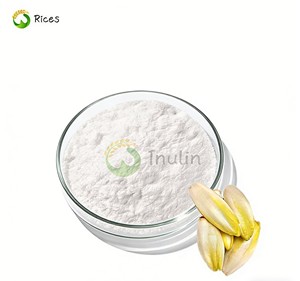
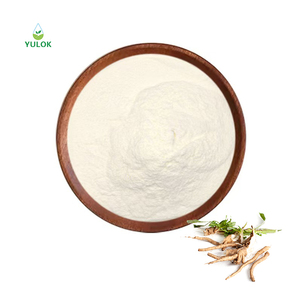
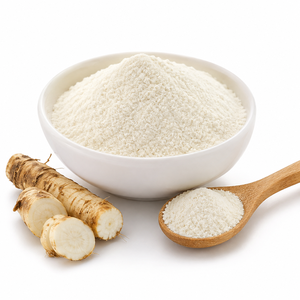
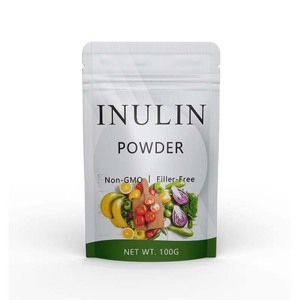
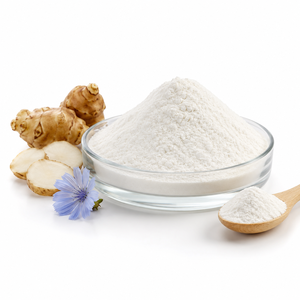
Understanding degree of polymerization (DP), solubility kinetics, and prebiotic selectivity for high-performance formulation in the Canadian market.
As the demand for functional foods and Natural Health Products (NHPs) accelerates across Toronto and the Greater Golden Horseshoe, procurement managers and formulators require raw materials backed by rigorous chemical characterization. Inulin is a heterogeneous mixture of fructose polymers linked by β-(2→1) fructosyl-fructose bonds, terminating in a glucose unit. The functional versatility of Chicory Root Extract (Cichorium intybus) and Jerusalem Artichoke Extract (Helianthus tuberosus) is governed primarily by their Degree of Polymerization (DP).
Native chicory inulin typically features a DP ranging from 2 to 60, whereas high-performance long-chain inulin fractions (DP ≥ 23) act as fat mimetics and structural texturizers. Conversely, short-chain fructooligosaccharides (FOS) offer rapid dispersion, high hygroscopicity, and immediate prebiotic fermentation profiles. When serving Toronto’s diverse food manufacturing ecosystem—ranging from craft functional beverages in Downtown Toronto to large-scale commercial bakeries in Mississauga—selecting the exact DP distribution is paramount for shelf-life stability, syneresis control, and glycemic response modulation.
| Technical Parameter | Standard Native Inulin (90%) | High Performance (HP) Inulin | Jerusalem Artichoke Inulin |
|---|---|---|---|
| Degree of Polymerization (DP) | 2 – 60 (Avg. 10 – 12) | ≥ 23 (Avg. 25) | 2 – 40 (Avg. 8 – 10) |
| Dry Matter Assay (Fiber Content) | ≥ 90.0% | ≥ 99.5% | ≥ 90.0% |
| Solubility in Water (20°C) | ~ 120 g/L (Clear to Hazy) | ~ 25 g/L (Forming Micro-crystals) | ~ 150 g/L (High Solubility) |
| Caloric Value (Health Canada Standard) | 1.5 kcal/g | 1.5 kcal/g | 1.5 kcal/g |
| Rheological Behavior | Viscosity enhancer, mild creaminess | Gels at >15% concentration, fat replacer | Low viscosity, high dispersibility |
| Thermal Stability | Stable up to 140°C at pH > 5.0 | Stable up to 160°C at pH > 4.5 | Stable up to 135°C at pH > 5.2 |
In prebiotic mechanism trials, inulin selectively stimulates beneficial gut bacteria, specifically Bifidobacterium and Lactobacillus species, while generating short-chain fatty acids (SCFAs) such as acetate, propionate, and butyrate. This metabolic pathway decreases luminal pH, enhances mineral absorption (notably Calcium and Magnesium), and improves systemic metabolic markers. For Toronto brand owners positioning products under Health Canada’s dietary fiber guidelines, raw chicory root inulin provides a dual benefit: compliant fiber fortification and clean-label sugar reduction.
From Mississauga’s industrial baking sector to Markham’s nutraceutical corridors, our herbal extracts and soluble fibers address key regional production challenges.
Commercial bakeries across Peel Region face stringent consumer demand for sugar reduction without compromising starch structure or moisture retention. Incorporating our Chicory Root Extract Inulin Powder (90% Purity) at 5% to 12% inclusion rates acts as a natural humectant, binding free water and delaying staling. High-performance long-chain inulin mimics the mouthfeel of shortening and butter, allowing a 30% reduction in lipids while delivering a certified "High Source of Fiber" claim under Canadian Food Inspection Agency (CFIA) regulations.
Toronto's vibrant beverage innovation hub requires zero-sediment, ultra-clear botanical ingredients. Our 100% Water Soluble Inulin Powder dissolves rapidly in ambient water systems without altering turbidity or introducing off-flavors. When paired with high-intensity natural sweeteners like Organic Monk Fruit Extract or Stevia Reb-A (supplied by Sunland Nutrition), inulin masks lingering glycoside bitterness, rounds out body, and creates a sugar-like mouthfeel in zero-sugar sparkling teas, adaptogenic sodas, and kombuchas.
Contract capsule and tablet manufacturers in York Region demand highly compressible, low-hygroscopic raw materials. Our supplement-grade Jerusalem Artichoke & Chicory Extracts undergo specialized spray-drying to achieve optimized particle size distribution (100-200 mesh). This guarantees free-flowing behavior in high-speed encapsulate machines. When combined with strain-verified probiotics, our inulin serves as an ideal prebiotic matrix, boosting colony stability and shelf-life throughout distribution across Canada.
Formulating oat-based yogurts, almond milks, and vegan ice creams often leads to watery texture or phase separation. Utilizing high-solubility inulin restores fat-like viscosity and stabilizes oil-in-water emulsions. Furthermore, inulin lowers the freezing point of frozen desserts in a manner analogous to sucrose, yielding a smooth, scoopable texture without crystalline ice formation.
Navigating NNHPD regulations, NPN licensing, NOP-COR organic equivalency, and clean-label shifts in Ontario.
Operating in Toronto means adhering to some of the world's most rigorous regulatory standards enforced by Health Canada and the Canadian Food Inspection Agency (CFIA). Brands aiming to capture market share in Canada must ensure their ingredient suppliers deliver bulletproof traceability and compliance documentation.
Connecting Canadian formulators directly to audited, global manufacturing capacity with local supply chain reliability.
Established in 2012 in Aliso Viejo, California, Sunland Nutrition qualifies every extraction mill on process controls, extraction solvent safety, purity assays, and lot-to-lot consistency before inclusion on our approved supplier list.
Every shipment arrives complete with a batch-specific Certificate of Analysis (COA), Technical Data Sheet (TDS), Specification Sheet, Allergen Statement, GMO Statement, and Organic / Kosher / Halal certifications.
We maintain deep inventory positions in our US warehousing network. Freight to Toronto, Mississauga, and Hamilton hubs is expedited via established cross-border logistics lanes, eliminating stock-out risks.
Our technical specialists assist your R&D team with solubility trials, particle size selection, and sweetness modulation. Free bench-scale samples ship directly to your lab before commercial commitments.

Answers to common questions from Canadian QA directors, procurement officers, and food scientists.
Every lot shipped to Canadian facilities includes a comprehensive documentation pack: a lot-specific Certificate of Analysis (COA) detailing active assay, fiber content, heavy metals, pesticide screening, moisture, ash, and microbiological counts. We also provide Technical Data Sheets (TDS), Allergen & Non-GMO Statements, and, where applicable, USDA Organic (NOP/COR recognized), Kosher, and Halal certificates.
Our standard commercial MOQ starts at 25 kg multi-wall paper drums or bags for pilot and commercial scale-up. Stock held in our US warehousing network delivers to GTA facilities (Toronto, Mississauga, Brampton, Markham) within 2 to 4 business days via customs-cleared LTL or FTL freight. Direct-from-mill scheduled container shipments carry a lead time of 4 to 8 weeks.
Chicory root inulin is accepted by Health Canada as a traditional dietary fiber source. It carries an accepted caloric value of 1.5 kcal/g (6.0 kJ/g), enabling formulators to declare fiber content on Nutritional Facts Tables while reducing net carbohydrates and overall caloric density in finished food products.
Chicory root inulin generally features a slightly higher average DP (10-12), making it ideal for gel formation, fat replacement, and thermal stability in baked goods. Jerusalem Artichoke inulin contains a higher proportion of short-chain fructooligosaccharides, yielding higher cold-water solubility, rapid dissolution, and a sweeter initial taste, which suits RTD beverages and sachet drink mixes.
Yes. We provide complimentary 100g to 500g laboratory evaluation samples accompanied by matching COAs to qualified Canadian formulators, brand owners, and contract manufacturers. This allows your R&D team to verify solubility, sensory profile, and processing compatibility prior to commercial scale-up.