Engineered for maximum bio-activity, heat resilience, and gastric survivability in tropical environments.
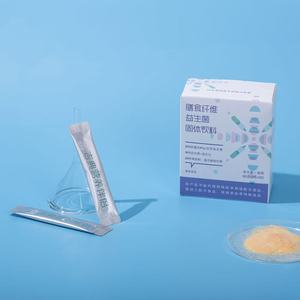
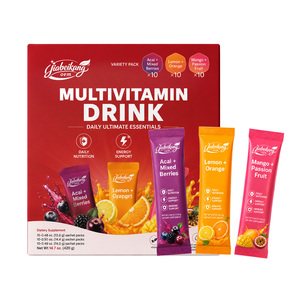
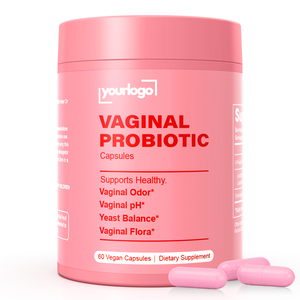
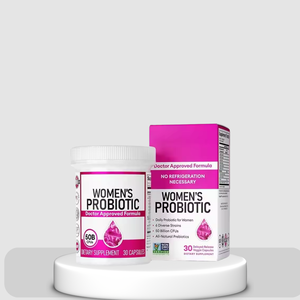
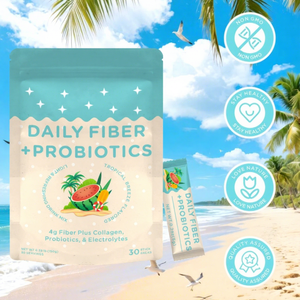
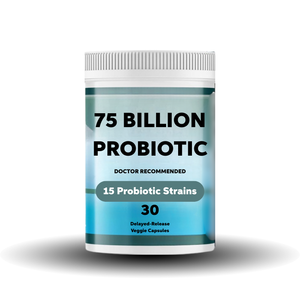
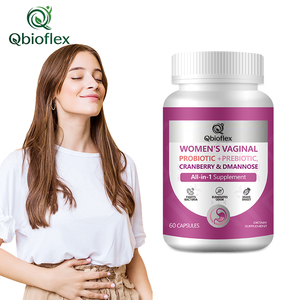
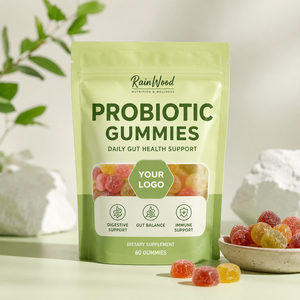
As Kenya consolidates its position as the commercial and healthcare hub of East Africa, the demand for high-potency, scientifically validated probiotic strains is experiencing exponential growth. Driven by expanding urban centers such as Nairobi, Mombasa, Kisumu, and Nakuru, Kenyan consumers are rapidly shifting toward preventative healthcare, microbiome wellness, and functional nutrition. For local pharmaceutical distributors, nutraceutical brand owners, and food processing enterprises, securing a reliable B2B supply of bulk probiotic raw materials and finished private-label formulations is critical to capturing market share.
However, exporting and distributing probiotics within Kenya presents distinct environmental, regulatory, and supply chain challenges. Successful market penetration requires navigating the specific requirements established by the Kenya Bureau of Standards (KEBS) and the Pharmacy and Poisons Board (PPB), while engineering delivery vehicles capable of enduring tropical logistics environments without rapid viability decay.
Technical Insight for Kenyan Procurement Officers: Ambient storage temperatures in coastal regions like Mombasa frequently exceed 30°C with relative humidity above 80%. Standard lyophilized probiotic strains without specialized microencapsulation or protective desiccant packaging risk losing up to 70% of active CFU count within 60 days of port clearance. Sunland Nutrition provides Zone IVb climate-stabilized formulations engineered to guarantee shelf-life claim integrity throughout East Africa.
Over-the-counter sales of probiotic capsules and sachets across Kenyan pharmacy chains (such as Goodlife, MyDawa, and Haltons) have surged due to rising medical awareness around gut dysbiosis, antibiotic recovery, and gastrointestinal infection management.
Specialized female health formulations combining Lactobacillus reuteri, Lactobacillus rhamnosus, and prebiotic soluble fiber represent one of the fastest-growing categories in urban retail networks across Kenya.
Kenya's vibrant dairy sector—including traditional fermented milk products like Mala and modern commercial yogurt lines—is increasingly adopting spore-forming strains like Bacillus coagulans to add functional digestive claims.
Sunland Nutrition simplifies the import pathway for Kenyan businesses by adhering to rigorous international regulatory standards. Every consignment exported to Kenya comes equipped with full technical documentation to ensure seamless clearance through the Pre-Export Verification of Conformity (PVoC) program, resulting in swift issuance of the mandatory Certificate of Conformity (CoC).
| Regulatory Body / Parameter | Requirement for Kenyan Import | Sunland Nutrition Compliance Guarantee |
|---|---|---|
| KEBS PVoC Program | Verification of physical standards, potency, and safety prior to shipment. | Complete CoC documentation issued via accredited testing bodies (SGS, Intertek, Cotecna). |
| Microbiological Limits | Strict absence of Salmonella, E. coli, Staphylococcus aureus, and yeast/mold limits. | Every batch undergoes 3rd-party assay testing with batch-specific Certificates of Analysis (CoA). |
| Stability Protocol | ICH Zone IVb testing ($30^\circ\text{C} \pm 2^\circ\text{C} / 75\%\text{ RH} \pm 5\%\text{ RH}$). | Overages engineered into formulations to guarantee stated CFU count through expiry. |
| Labeling Standards | Clear strain designations (e.g., L. acidophilus LA-14), CFU counts, storage guidance, and manufacturing info in English. | Custom OEM packaging fully aligned with KEBS and PPB labeling guidelines. |
Not all probiotic raw materials are created equal. When formulating for the East African market, ingredient resilience during gastrointestinal transit and environmental stability are paramount. Below is an engineering comparison of the bacterial strains and carrier matrices Sunland Nutrition exports to Kenya.
Spore-Formers (e.g., Bacillus coagulans, Bacillus subtilis): These strains feature a protective protein shell that allows them to survive extreme heat, moisture, and stomach acidity without refrigeration. Ideal for Kenyan food processing, functional gummies, and hot-climate ambient distribution.
Microencapsulated Vegetative Strains (e.g., Lactobacillus, Bifidobacterium): Utilizes lipid matrix double-layer microencapsulation. Protects delicate cells from gastric fluid ($pH < 2.0$) and delivers over 90% viable CFUs directly into the small intestine and colon.
Probiotics require suitable substrates to proliferate upon reaching the host intestinal tract. Our custom formulations for Kenya integrate synergistic prebiotic fibers:
Sunland Nutrition offers comprehensive end-to-end private-label solution design for Kenyan healthcare companies, pharmacy chains, and direct-to-consumer wellness brands. From custom strain blending to finished product packaging, our state-of-the-art US facilities operate under strict cGMP and ISO guidelines.
We tailor strain concentrations ranging from standard 1 Billion CFU daily maintenance formulations up to ultra-high potency 75 Billion and 100 Billion CFU therapeutic blends.
Desiccant-lined HDPE bottles, ALU-ALU tropicalized blister cards, moisture-barrier sachet foils, and pectin-based heat-resistant gummy jars designed to block humidity.
Every order includes Certificates of Free Sale, Halal Certification, Kosher Certification, Non-GMO verification, and USDA Organic options tailored for import approval.
Direct answers to essential commercial, logistical, and technical questions regarding importing probiotics to Kenya.
Our probiotic blends carry a 24-month shelf life from the date of manufacture. To combat ambient heat and humidity during transit and storage in East Africa, we incorporate a 15% to 20% strain overage at the time of blending and utilize specialized desiccants and moisture-impermeable barrier packaging. This guarantees that stated CFU counts are maintained through the product's expiration date under recommended storage conditions ($< 25^\circ\text{C}$).
We provide both air freight (to Jomo Kenyatta International Airport, Nairobi) and ocean freight (to the Port of Mombasa). Air freight shipments are packaged in insulated thermal boxes with dry ice or phase-change gel packs. For sea freight, we utilize temperature-controlled reefer containers set at $+4^\circ\text{C}$ to $+15^\circ\text{C}$, continuously monitored with USB temperature data loggers to prevent heat exposure during sea passage and customs clearance.
For standard bulk probiotic strain powders (single strain or raw blends), our minimum order quantity starts at 25 kg per drum. For custom private-label encapsulated or sachet products, OEM MOQs generally start at 100,000 capsules or 50,000 sachets. Functional gummies start at 3,000 bottles. Pilot scale batches are available for qualifying distributors.
Yes. We supply your regulatory affairs team with full dossier support, including batch Certificates of Analysis (CoA), Manufacturing Flow Charts, Stability Study Reports, Quantitative Strain Compositions, BSE/TSE-Free Certificates, and Certificates of Free Sale issued by US authorities to streamline registration with the Pharmacy and Poisons Board and KEBS.
Absolutely. All our probiotic fermentation media and excipients are 100% pork-free, animal-derivative free, and non-alcoholic. We provide recognized Halal certifications for our production facilities and finished strain matrices, making them fully compliant for distribution across Kenya and the broader East African Community (EAC).
Yes. Our in-house R&D team can formulate specialized synbiotic matrices targeted at specific health indications—such as infant gut health sachets, women's urogenital microflora capsules, or high-dose antibiotic recovery blends—combining probiotics with vitamins, minerals, herbal extracts, and dietary fibers.
Access pharmaceutical-grade, climate-stabilized probiotic blends backed by complete CoA documentation, competitive factory pricing, and dedicated export logistics support for East Africa.
Send an Inquiry